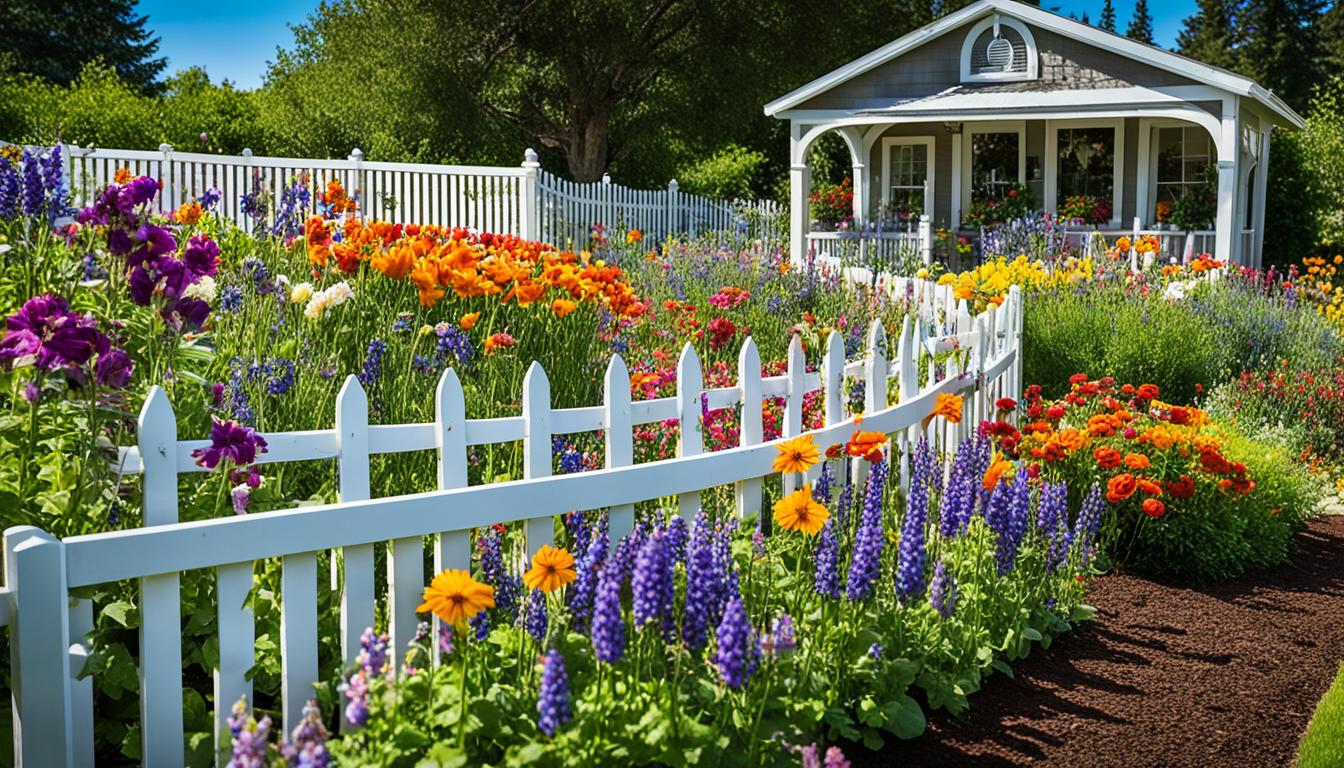
Starting a flower garden is a rewarding project that can turn your outdoor area into a beautiful oasis. It doesn’t matter if you’re experienced or new to gardening. This guide will help you with the key steps to make and keep a flower garden. You’ll learn how to pick the best spot and the right flowers for your area.
Growing flowers is a fun and fulfilling hobby. It lets you connect with nature, enjoy colorful blooms, and attract pollinators. With the advice in this article, you’ll be on your way to a lovely flower garden. This garden will bring joy and peace to your home for many years.
Choosing the Perfect Garden Spot
Finding the best spot for your flower garden is key to a thriving garden. The ideal spot offers the right sunlight and soil for your flowers. This balance is crucial for their growth and beauty.
Evaluating Sunlight Exposure
Choosing the right garden spot means considering sunlight. Most flowers need at least 6 hours of direct sunlight daily. Look at how the sun moves across your garden to find the best sun exposure for flowers.
Assessing Soil Quality
Soil quality is also vital for your garden. It should drain well, be rich in organic matter, and have a pH of 6.0 to 7.0. A simple soil test can guide you to the best location for flower garden by showing what amendments you might need.
By looking at sunlight and soil, you can pick the perfect spot for your garden. This ensures your flowers will grow well and look great.
Planning Your Flower Garden Layout
Designing your flower garden’s layout is key to a beautiful and useful outdoor area. The way you arrange your plants greatly affects the look of your garden. By planning well, you can make your garden look great and serve its purpose.
When planning your garden, think about how different plants grow and bloom. Arrange them to balance out the colors, heights, and shapes. For example, put taller plants at the back and shorter ones in front for a nice layered look.
Think about what you want your garden for, too. If you want to attract butterflies, arrange plants to make a path for them. Or, if you want a quiet spot, design paths that wind through the garden.
The secret to a great garden layout is finding a balance between looks and use. By planning your plant arrangement, you can make a beautiful and useful garden. It will show off your style and help you reach your gardening goals.
Preparing the Soil for Planting
Flower gardeners know that healthy soil is key for a garden full of blooms. Before you begin planting, make sure the soil is ready. This means tilling and adding organic matter to create the best environment for your flowers.
Tilling and Amending the Soil
Start by tilling the soil. Use a rototiller or garden fork to loosen the top 6-8 inches. This makes the soil airy and breaks up hard spots. After tilling, add organic stuff like compost or manure to the soil.
This boosts the soil’s structure, nutrient levels, and drainage. These are vital for growing beautiful flowers.
For a garden full of flowers, aim for soil that’s rich in nutrients. Mix the organic matter well into the tilled soil. This step is crucial for a garden that’s perfect for flowers.
Starting with a strong soil foundation is key to a great flower garden. Spending time to prepare your soil leads to vibrant, healthy flowers all season.
Selecting Flower Varieties for Your Climate
Choosing the right flowers is key for a successful garden in your climate. You might want to know the best flowers for your area, the difference between annual and perennial flowers, or how to plan blooms for the best look. This section will guide you through all these topics.
Annuals vs. Perennials
Deciding between annual and perennial flowers is a big step in planning your garden. Annuals, like marigolds and zinnias, live only one season and need replanting every year. Perennials, however, come back each year, saving you time. Think about your climate and how much time you want to spend on your garden when choosing.
Considering Bloom Times
Choosing flowers that bloom at different times makes your garden look great all season. Start with early bloomers like tulips and daffodils, then add mid-season flowers like peonies and daylilies. Late-season flowers like chrysanthemums and asters can keep your garden colorful even longer. By picking flowers based on their bloom times, your garden will always look lively.
To pick the best flowers for your climate, research their growing needs and traits. This way, you can create a garden that thrives, looks beautiful, and suits your local weather and your tastes.

Nature Tips: Attracting Pollinators
Pollinators are key to a healthy garden. Bees, butterflies, and other insects help pollinate plants, making them produce fruits and seeds. By making your garden pollinator-friendly, you help these creatures and get more blooms and harvests.
Choose native flowers that fit your local climate. These plants offer more nectar and pollen than non-native ones. Pick flowers that bloom from spring to fall to feed pollinators all season.
Great flowers for pollinators are coneflowers, sunflowers, zinnias, and lavender. These flowers attract bees and hummingbirds. Planting different flowers makes your garden a welcoming place for pollinators and helps the local ecosystem.
Don’t forget to add fresh water and nesting spots for pollinators. These simple steps turn your garden into a haven for pollinators. It supports their balance and keeps your plants healthy for years.
Planting Techniques for Success
Learning how to plant flowers right is key for a great start. Whether you’re a beginner or want to get better at flower gardening, knowing about spacing and depth is crucial. These factors greatly affect your flowers’ health and growth.
Proper Spacing and Depth
When planting flowers, think about spacing and depth. Good spacing lets each plant grow well without crowding. The right depth helps roots spread out and reach needed nutrients and water.
Space your flowers based on how big they’ll get. This stops them from fighting over resources and helps air move around. This reduces disease risk.
Use the seed packet or plant tag for spacing advice. Spacing can vary from 6 inches for small annuals to 18-24 inches for big perennials. Dig a hole that’s two to three times the root ball’s width. Plant the flower at the same depth it was in its pot or at the soil line if you’re sowing seeds. This helps your flowers develop a strong root system and start healthy.

Remember, right spacing and depth are key for your flower garden’s success. By following these tips, you’ll have a beautiful, colorful garden that will impress everyone.
Watering and Fertilizing Your Flower Garden
Keeping your flower garden healthy means watering and fertilizing it right. It’s key for your plants to get enough water and nutrients to bloom well. This helps them grow strong and show off their colors all season.
For watering flowers, give them a good soaking often, not just a little water here and there. Water your plants about 1-2 inches a week, either from rain or by hand. Check the soil to see if it needs more water. Plants in pots or sandy soil might need more water than those in clay soil.
Also, make sure to fertilize your flower garden regularly. Use a slow-release fertilizer made for flowers, and follow the directions on the package. You should fertilize every 4-6 weeks when your plants are growing.
This keeps your plants healthy and full of flowers. By taking good care of your flower garden, you’ll have a beautiful spot to enjoy all season.
Maintaining a Healthy Flower Garden
Keeping your flower garden healthy and full of life needs regular care. This includes getting rid of weeds and pests and cutting back dead flowers. These steps are key to making your garden look its best.
Weeding and Pest Control
It’s important to remove weeds to help your flowers grow well. Pull weeds by hand, making sure to get the whole root. Mulching around your plants can also stop weeds from growing back.
Watch out for pests like aphids, Japanese beetles, and spider mites. If you find an infestation, use organic or natural ways to control them.
Deadheading and Pruning
Deadheading means cutting off dead flowers to keep your plants blooming longer. Use sharp pruners to remove the dead flowers, leaving the healthy leaves below. Pruning also helps keep your plants neat and encourages healthy growth.
Trimming back overgrown or messy plants makes your garden look better. It also helps air move around your plants, which is good for them.