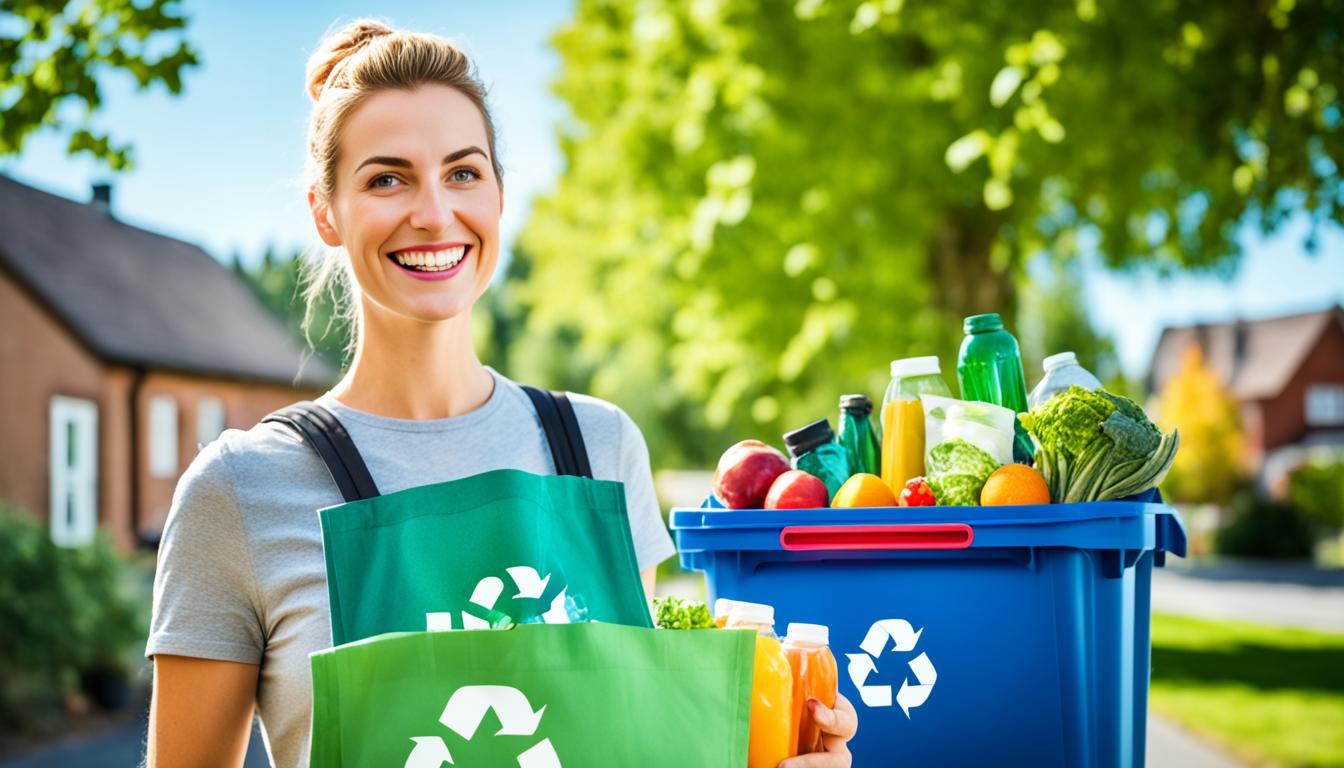
In today’s world, taking care of our planet is more important than ever. We all need to cut down on waste and live more sustainably. Luckily, there are easy steps you can follow to reduce waste at home and help the environment.
These nature tips include embracing minimalism and composting organic waste. They can help you make a big difference. By making these changes, you can live a greener lifestyle.
By using these 10 easy ways to reduce waste at home, you can do more for the planet. You’ll also save money, declutter your home, and live more mindfully. Let’s look at how you can change your daily habits for a better future.
Embrace a Minimalist Lifestyle
Starting a minimalist life can greatly reduce waste at home. Begin by decluttering your space and giving away items you don’t need. This approach not only cuts down on your belongings but also makes sure your items go to good use elsewhere.
Declutter and Donate
Look through your things room by room, and decide what you really use and love. Anything that doesn’t help or make you happy can go for donation. You can donate to local charities, thrift stores, or use online sites like Craigslist or Facebook Marketplace.
Buy Only What You Need
For sustainable consumption and conscious buying, being minimalist is key. Don’t buy things on a whim. Think about if you really need it or if you’ll use it often. This way, you cut down on waste and save money too.
Living minimally means decluttering your home and your mind. Having fewer things gives you freedom. It lets you focus on what’s important and live a happier life.
Ditch Single-Use Plastics
Are you tired of adding to the growing plastic waste problem? It’s time to change and stop using single-use plastics. By choosing reusable products and sustainable packaging, you can greatly reduce your plastic use. This helps make a cleaner, more sustainable future.
Invest in Reusable Containers
Swapping single-use plastics for reusable items is an easy way to reduce waste. Get a good reusable water bottle and carry it with you. Use reusable grocery bags when you shop. Also, pick reusable food storage containers instead of plastic baggies or disposable ones.
These changes not only cut down on plastic-free waste but can also save you money. Look for sustainable packaging made from glass, silicone, or bamboo. These materials are more durable and better for the planet.
Switching to zero-waste alternatives helps make a cleaner future. It’s a small step with a big impact. So, start using reusable products and help make a difference today.
Compost Your Organic Waste
Composting your organic waste is a big step towards a greener lifestyle. Food scraps and yard trimmings make up a lot of landfill waste, leading to methane production. Composting helps cut down on this waste and makes a soil amendment for your garden.
Composting turns food waste and yard trimmings into a dark, crumbly material. This material, called compost, is great for your garden. It gives plants the nutrients they need to grow well. Adding compost to soil also improves its structure and health, making gardening more sustainable.

Starting a compost bin or pile is easy and rewarding. You can buy a bin or make one with a strong container or a yard spot. Mix “browns” (dry leaves, paper, or straw) with “greens” (food scraps, coffee grounds, or grass clippings). Keep the mix balanced and moist to make nutrient-rich compost and reduce waste.
Composting is key to a sustainable lifestyle. It cuts down on landfill waste and helps the circular economy. By recycling organic waste, you ensure nutrients go back to the soil. This supports healthy plants and a sustainable garden ecosystem.
Nature Tips: Grow Your Own Food
Growing your own food is a great way to live more sustainably and self-sufficiently. You don’t need a big backyard to start. Even a small balcony can be perfect for home gardening and urban farming. By growing your own food, you cut down on industrial food systems and enjoy fresh, tasty produce.
Start a Garden or Window Herb Box
You can start a garden or a window herb box even with limited space. A small backyard, patio, or sunny windowsill is great for a garden. Pick crops that fit your climate and growing conditions. Leafy greens, tomatoes, peppers, beans, and herbs are good choices for both outdoor and indoor gardens.
Having a garden or herb box gives you fresh, nutritious food and brings joy. Taking care of your plants and watching them grow is rewarding. It also connects you to nature, promoting self-sufficiency and caring for the environment.
Start small in your gardening journey and grow as you learn more. With patience and the right methods, even small urban spaces can become a garden. This helps make a sustainable food system and supports a healthier, more independent life.
Repair and Reuse
In today’s fast-paced world, it’s easy to throw away broken or worn items. But, by embracing a repair culture and learning DIY skills, we can make our things last longer. This helps reduce waste and supports a sustainable consumption and circular economy.
Learn Basic Sewing and Carpentry Skills
Learning the basics of sewing and carpentry is empowering. It lets us fix our favorite items, like clothing or furniture. These skills help us avoid constantly buying new things, which is better for the planet.
Sewing can make your clothes last longer. Simple skills like sewing on a button or fixing a seam can save your clothes. Carpentry skills, like using a hammer and screwdriver, are useful for many repairs at home. They help fix things like squeaky doors or broken chairs.
By embracing repair and honing DIY skills, we save money and help the environment. Repairing and reusing our items cuts down on waste. It encourages a more eco-friendly lifestyle.
Reduce Paper Waste
In today’s digital age, cutting down on paper waste is crucial. Living paperless and choosing digital alternatives helps the environment and makes life easier. By using less paper, you help reduce waste and make your office more sustainable.
Go Paperless Whenever Possible
Going paperless is an easy way to cut waste. Choose electronic bills and e-books over paper ones. Many companies now offer online services that let you manage your accounts without paper.
When you need to print, print on both sides to save paper. Use digital signatures and online tools to cut down on paper. These digital alternatives can greatly reduce your paper use and help the planet.

Reducing paper waste is a big step towards a greener office and planet. By living paperless and using digital alternatives, you lessen your environmental impact. You also inspire others to do the same.
Conserve Water
Water conservation is crucial for an eco-friendly and sustainable home. Start by fixing any leaks in your plumbing. Small drips can waste thousands of gallons of water each year. Check your home for leaks and fix them quickly to save water.
Fix Leaks and Install Water-Saving Fixtures
Repairing leaks is just the beginning. Upgrade to water-saving fixtures to improve your home’s efficiency. Use low-flow showerheads, faucets, and toilets to cut down your water use. Choose fixtures with the Environmental Protection Agency’s
Small changes in your daily habits can help too. Turn off the faucet while brushing your teeth or take shorter showers. These simple actions support water conservation and a sustainable home.
Shop Locally and Seasonally
Shopping for local food and seasonal produce is key for us. It helps our local businesses and cuts down on transportation’s environmental harm. By shopping sustainably, we get the freshest ingredients and help our community thrive.
Buying local food at farmer’s markets or from CSAs connects us to where our food comes from. These places often use eco-friendly farming and offer unique, seasonal produce not found in big stores. Supporting these small shops keeps our money in our community, boosting the local economy.
Shopping for seasonal produce has many perks. Foods in season are more nutritious and taste better because they’re picked ripe. They also need less energy to grow and ship, which lowers our carbon footprint. By shopping with the seasons, we enjoy the best flavors and nutrition nature offers.
Choosing local food and seasonal produce is a big step towards a greener future. It helps our local economy and lets us enjoy the best flavors. Let’s make a difference with our shopping choices and build a stronger community.
Recycle and Repurpose
Recycling is key to cutting down waste and saving natural resources. Make sure to recycle things like paper, plastic, glass, and metal. This way, they get reused instead of going to landfills. Doing this can really help the planet.
Get Creative with Upcycling Projects
Don’t just recycle, try upcycling to give old items a new life. Upcycling means making something new from things you might throw away. You can make reusable bags from old t-shirts or decorate your home with recycled bottles. It’s a fun way to be creative and help the environment.
Upcycling also supports a circular economy by reducing waste. It encourages us to reuse and recycle instead of throwing things away. So, get creative and enjoy making a positive impact with your DIY projects.