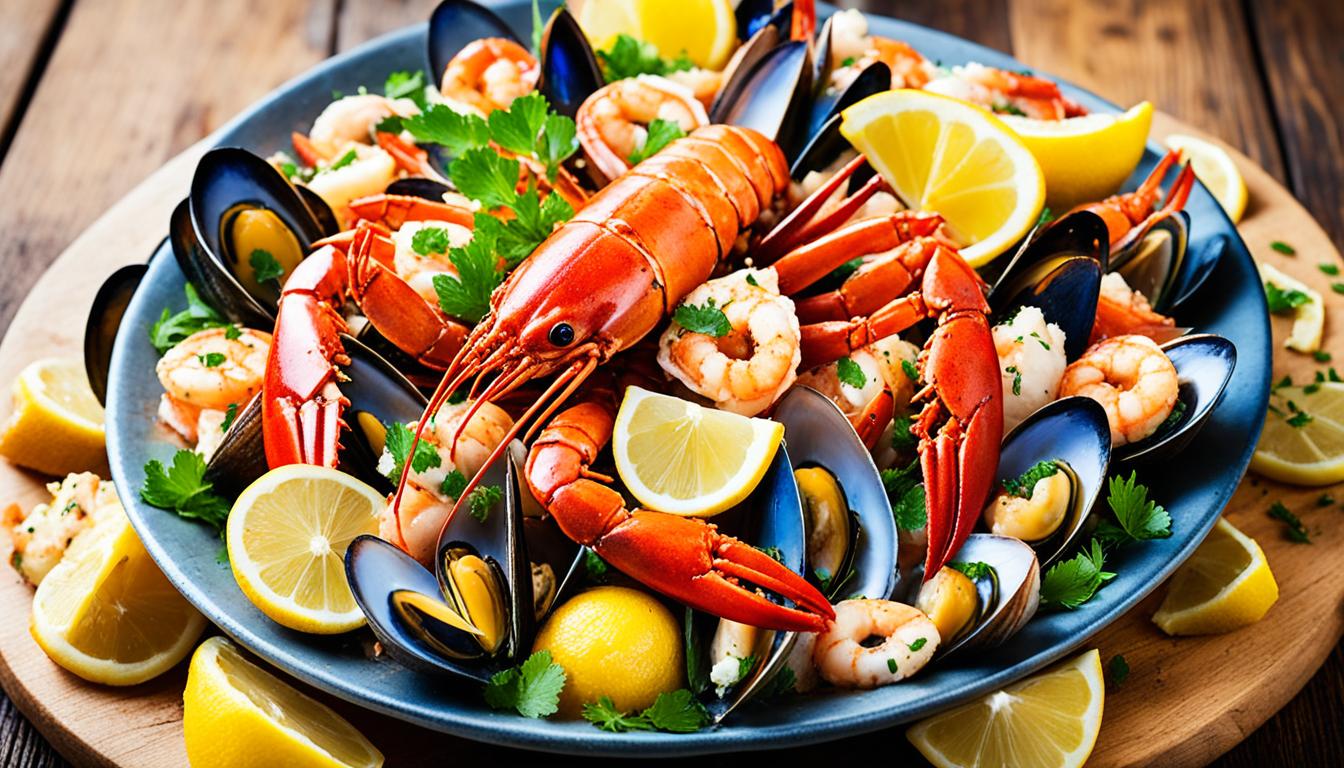
Seafood lovers, get ready for an amazing cooking journey! This guide is your key to making seafood taste perfect. It’s perfect for both experienced cooks and beginners in seafood cooking. You’ll learn how to make delicious and tasty seafood dishes.
Learn about the best ways to prepare seafood and various cooking methods. This guide will teach you how to improve your seafood cooking skills. You’ll find out how to pick fresh seafood and the right tools for cooking.
Explore different cooking methods like grilling, baking, pan-searing, steaming, and frying. Each method brings out unique flavors and textures in seafood.
Learn how to pair seafood with great sauces and sides to make meals better. We’ll also talk about choosing sustainable seafood. This helps you make choices that are good for the ocean.
Get ready for a unique cooking adventure. This guide will turn your kitchen into a place where seafood lovers can enjoy amazing dishes. Every bite will show off your new skills in cooking seafood.
Mastering the Art of Seafood Preparation
Preparing seafood is like an art form. It needs a keen eye, a steady hand, and the right tools. Whether you’re a pro chef or cooking at home, learning the key skills is vital. This knowledge helps make dishes that highlight the ocean’s flavors.
Essential Tools and Equipment
Starting with the right tools is key to seafood success. A sharp, high-quality fillet knife is a must for cutting fish and shellfish with care. Kitchen shears are great for trimming fins or deveining shrimp. A flexible fish spatula makes handling delicate seafood easy during cooking.
Also, a cutting board made for seafood keeps your work area clean. It has grooves to catch juices, keeping things tidy.
Selecting Fresh and High-Quality Seafood
Freshness is crucial with seafood. Choose fish that looks vibrant and has no dull spots or bad eyes. Shellfish should be closed tightly with no damage. The smell should be mild and salty, not too strong or fishy.
Working with reputable local seafood markets or fishmongers ensures you get the best seafood. They can help you find top-quality seafood.
Mastering seafood preparation and choosing the freshest ingredients leads to delicious dishes. These dishes truly capture the essence of the sea.
Cooking Methods for Different Seafood Types
Choosing the right cooking method is key to making delicious seafood dishes. From grilled salmon to fried calamari, each seafood type has its best cooking way. We’ll look at different methods to help you make tasty meals every time.
For a smoky taste, try grilling seafood. Grilling scallops or shrimp brings out their natural sweetness and tenderness. Baking seafood is great for a healthier option. It lets the seafood’s flavors stand out without using too much oil.
If you want a rich seafood taste, pan-searing seafood is perfect. It creates a crispy outside and a juicy inside. Steaming seafood is great for keeping its moisture and flavor.
For a treat, try frying seafood. Fried fish or shrimp have a crispy outside and a juicy inside. No matter your favorite method, learning these techniques will expand your seafood cooking skills.
Grilling Seafood to Perfection
Grilling seafood is a great way to bring out the natural tastes of your favorite ocean-fresh ingredients. Whether you’re grilling fish or shellfish, learning how to grill seafood can change your cooking game. We’ll share essential tips and techniques to help you grill seafood perfectly every time.
Tips for Perfectly Grilled Fish and Shellfish
Start with the right cuts and prepare your grill for the best results. Choose thick, flaky fish fillets or steaks for grilling. For shellfish, pick shrimp, scallops, or lobster tails that are easy to skewer or grill directly.
Getting your grill ready is crucial for grilling seafood. Heat it up to medium-high and clean the grates well to avoid sticking. Brush the grates with oil for a nonstick surface. When adding seafood, place it on the grates so it doesn’t fall through.
Timing is crucial for grilling seafood. Fish fillets and steaks take 3-5 minutes per side. Larger fish like salmon or tuna need 6-8 minutes per side. Shellfish cook fast, usually in 2-3 minutes per side. Watch your seafood closely and flip it gently to cook evenly.

Grilling seafood well takes practice, but these tips will help you get started. Whether you’re hosting a barbecue or just want to add a smoky flavor to your seafood, use high-quality ingredients and grill with care. Pay attention to cooking time for the best results. With patience and delicious outcomes, you’ll soon be grilling seafood like a pro.
Baking and Roasting Seafood Delicacies
Seafood lovers, get excited! Baking and roasting are great ways to make your favorite fish and shellfish taste amazing. These methods let you cook your seafood in a way that’s both delicate and full of flavor.
For baking seafood, it’s important to get the temperature and cooking time just right. Fish like cod or halibut do well at 375°F, letting their natural flavors stand out. If you’re cooking salmon or tuna, try 400°F for a nice caramelized crust.
Roasting seafood is perfect for getting a tasty sear on the outside while keeping the inside juicy and flavorful.
There are a few tips to keep in mind when preparing seafood for baking or roasting. Seasoning your seafood with herbs and spices can boost the flavor. Adding olive oil or melted butter can also help create a crispy outside. Don’t forget to try different marinades or glazes for a unique taste.
Whether you want tender baked cod or delicious roasted shrimp, baking and roasting are great choices. So, heat up your oven, get your ingredients ready, and dive into the world of baking and roasting seafood.
Pan-Searing and Sautéing Seafood
When cooking seafood, pan-searing and sautéing are top choices. These methods make even simple seafood taste great. They bring out its natural sweetness and tender texture. Whether you’re using delicate fish or hearty shellfish, learning these techniques is key for any cook.
Mastering the Art of Pan-Searing
To pan-sear seafood right, aim for a crispy outside and a juicy inside. Begin by drying your seafood with paper towels for better searing. Then, heat a big skillet over high heat and add oil that can handle high heat, like grapeseed or avocado oil.
Once the oil is hot, add your seafood and let it sear for 2-3 minutes on each side. This will give it a golden-brown crust. After flipping, cook for another 2-3 minutes until it’s fully cooked. You’ll get seafood that’s full of flavor.
Sautéing seafood is similar to pan-searing but involves more stirring. You cook the seafood in a bit of hot oil or butter. This method is great for small seafood like shrimp or scallops. It cooks them quickly and evenly in the pan.
Exploring Seafood Flavors
Seafood dishes have a unique and delicate taste that can be made better with the right seasonings, herbs, and marinades. To get the most out of your seafood, pick flavors that complement your ingredients well.
When it comes to seafood flavors, finding the right balance is crucial. Too much seasoning can hide the seafood’s natural taste. But the right seafood seasonings, seafood herbs, and seafood spices can take your dish to the next level. You can use everything from zesty citrus to warm spices to add flavor.
Using seafood marinades is a great way to add bold flavors to your seafood. Marinades not only add taste but also make the meat tender. This makes your seafood perfect for grilling, baking, or pan-searing.

Don’t be afraid to try new things with herbs, spices, and marinades when exploring seafood flavors. Seafood goes well with many flavors, like the earthy taste of rosemary and thyme, or the bright taste of lemon and lime. By knowing about seafood seasonings and herbs, you can make your seafood dishes even better.
Steaming and Poaching Seafood
Steaming and poaching are top choices for keeping seafood’s delicate flavors and tender textures. These methods cook seafood gently, keeping it moist and full of flavor. This makes the seafood taste better and feel softer.
Retaining Moisture and Flavor
Steaming seafood at a low simmer keeps its juices in. This stops the seafood from drying out or getting tough. Poaching dips seafood in a tasty liquid, like court bouillon or fish stock, cooks it slowly. This infuses the seafood with more flavor.
Learning to steam and poach seafood makes your dishes moist, tender, and full of taste. Whether you’re cooking fish or shrimp, these methods ensure a perfect texture and flavor every time.
Steaming and poaching seafood keep its natural moisture and flavor. Unlike high heat cooking, which can dry out seafood, these methods cook seafood in its juices or a flavorful liquid. This results in a delicate and tender dish.
Frying Seafood for Crispy Perfection
Frying seafood isn’t the healthiest option, but it can be tasty if done correctly. The goal is to get a crispy outside and a tender, flavorful inside. Choosing the right oil, controlling the frying temperature, and timing are key to making your seafood dishes restaurant-quality.
Start with the right oil for frying seafood. High-heat oils like peanut, vegetable, or canola oil work best. They can handle the high temperatures needed for frying without burning or smoking. After picking your oil, keep the frying temperature between 350°F and 375°F. This ensures your seafood cooks evenly, giving you a crispy outside and a juicy inside.
Preparing the seafood properly is also important. Seafood tempura is a great example. It involves coating the seafood in a light batter before frying. The batter should be just thick enough to create a delicate crust without being heavy or greasy.
To get crispy fried seafood right, focus on the frying process. Don’t overcrowd the oil, as it can lower the temperature and make the seafood soggy. Fry in small batches, letting the oil heat up again between each batch. With practice, you’ll soon be serving crispy fried seafood like a pro.
Pairing Seafood with Sauces and Sides
Improving your seafood dishes is more than just cooking skills. Finding the right sauces and side dishes can make a big difference. Creamy sauces, zesty accompaniments, and more can bring out the best in your seafood. This creates a meal that tastes great and looks good.
Choosing the right seafood pairings is key. Go for sauces that highlight the seafood’s delicate taste, like beurre blanc or tangy chimichurri. Pairing seafood with sides that have different textures, like crispy veggies or fluffy mashed potatoes, adds to the fun of eating.
Complementary Flavors and Textures
Pairing seafood with sauces and sides is an art. Creamy sauces like hollandaise or lemon-caper butter go well with soft, flaky fish. Spicy or herbal sauces, like pesto or salsa verde, add a nice contrast to seafood’s sweetness.
Seafood sides offer many options. Crisp roasted veggies like asparagus or brussels sprouts add a nice crunch. Soft rice or quinoa can also be a good base, letting the seafood and sauce take center stage. Trying different things is the best way to find your favorite seafood pairings.
The key to pairing seafood with sauces and sides is balance. By mixing flavors and textures, you can make dishes that look great and taste amazing. Don’t be afraid to try new things and let your creativity shine!
Sustainable Seafood Choices
Choosing sustainable seafood helps the environment and gives you the freshest, tastiest seafood. It lets you enjoy delicious meals while helping our oceans and marine life. By picking wisely, you support the health of our oceans for the future.
Seafood sustainability is all about picking seafood that’s good for the planet. It means choosing seafood caught or farmed in ways that protect the environment and keep fish populations healthy. When you choose environmentally-friendly seafood, you help support fishing and farming that cares for the ocean.
Finding sustainable seafood is easy with labels from groups like the Marine Stewardship Council (MSC) or the Aquaculture Stewardship Council (ASC). These labels mean the seafood comes from places that care for the ocean. By picking seafood with these labels, you help keep our oceans healthy for years to come.