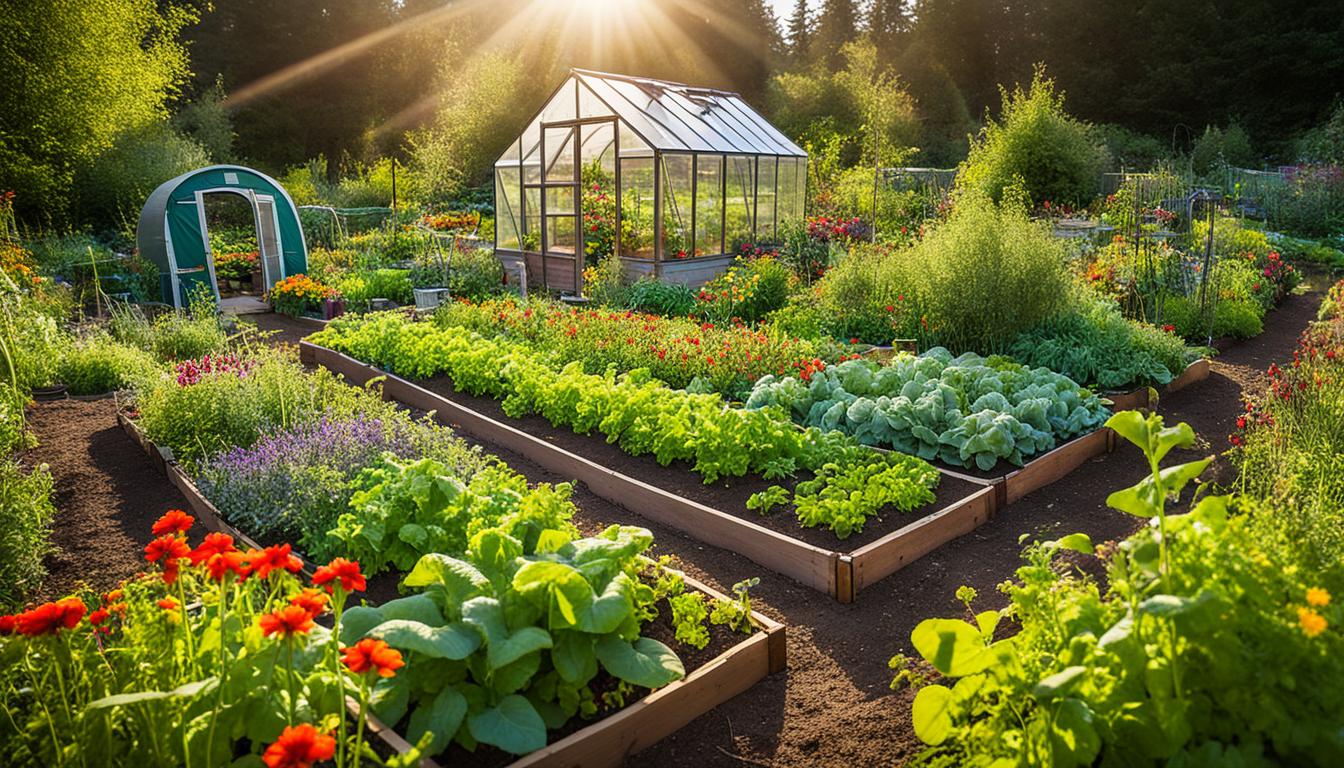
Organic gardening brings many benefits that go beyond your backyard. It’s great for both seasoned gardeners and beginners. This practice is good for your health, the planet, and your wallet.
It lets you grow fruits and veggies without harmful chemicals. Organic gardening also helps create a healthy environment. By using nature’s ways, you can enjoy a big harvest and help the planet.
This article will show you why organic gardening is so good. We’ll give you tips and ways to make your garden better for you and the earth.
What is Organic Gardening?
Organic gardening is a way to grow plants that focuses on sustainable and eco-friendly methods. It’s about making a garden where plants, soil, and helpful bugs work together well.
Understanding the Principles of Organic Cultivation
Organic gardening is all about taking care of the soil and letting nature do its thing. Gardeners use things like compost and manure to feed the soil. They also plant different crops together to help each other grow and keep pests away.
The Importance of Sustainable Practices
Sustainable gardening is key in organic gardening. Organic gardeners don’t use harmful chemicals. They choose natural ways to keep pests away and help their plants grow strong. This keeps the garden healthy and safe for everyone and protects the environment.
By following organic gardening, people can make a garden that’s full of life. It helps the planet and gives them fresh, healthy food for their families.
Nature Tips: Unleash the Power of Organic Gardening
Organic gardening connects us with nature’s beauty and abundance. It’s about using nature’s wisdom to create gardens that are good for the earth and our well-being. Here, we’ll share tips inspired by nature to make your organic garden flourish.
Composting is key in organic gardening. It turns kitchen scraps and yard waste into food for your plants. This approach helps reduce waste and feeds your plants without synthetic fertilizers.
Companion planting is another great idea. It means placing plants together to fight pests and boost health. For example, marigolds keep nematodes away, and basil protects tomatoes from pests.
For pest control, organic gardeners use safe methods. Instead of chemicals, try neem oil, diatomaceous earth, or beneficial insects like ladybugs. These methods protect your plants and keep your garden’s ecosystem balanced.
Healthier Produce, Healthier Life
The food we eat greatly affects our health and well-being. Organic gardening is a great way to get fresh, pesticide-free, and chemical-free produce. This can greatly improve our health. By choosing organic produce health benefits, we reduce our toxin intake and enjoy nature’s pure flavors.
Free from Harmful Chemicals and Pesticides
Organic gardening means no synthetic pesticides or chemical fertilizers. These substances can harm our bodies. By picking pesticide-free gardening and chemical-free food production, we eat fruits and veggies without harmful parts. This helps our bodies get the nutrients they need.
Studies show eating organic produce cuts down on toxins and pesticides. These have been linked to health problems like hormonal issues, brain disorders, and some cancers. By choosing organic produce health benefits, we look after our health and feel secure knowing our food is safe.

Nurturing the Environment
Organic gardening is more than just growing healthy food. It’s key to taking care of the environment. By using eco-friendly methods, gardeners help the ecosystem. They use natural fertilizers and support many kinds of life, making the land healthier for everyone.
One big plus of organic gardening is avoiding harmful chemicals. These can hurt the soil, water, and animals. Organic gardeners use natural stuff to feed the soil and fight pests. This keeps the environment balanced and safe for the future.
Organic gardens also help local plants and animals. By planting native plants, they become homes for bees, butterflies, and other helpful creatures. This makes gardens more beautiful and helps the environment stay healthy.
The good things about organic gardening go beyond just one garden. It helps the whole environment. By choosing organic, gardeners help save natural resources and keep the ecosystem healthy. No matter your gardening level, going organic can make a big difference.
Cost-Effective and Rewarding
Many think organic gardening is expensive, but it’s actually a budget-friendly hobby. By growing your own food, you can save money and eat fresh, healthy food. This eco-friendly hobby is both rewarding and cost-effective.
Save Money While Enjoying Fresh Produce
Growing your own food can cut down your grocery bills a lot. You avoid costs like transportation and packaging. This hobby saves you money over time, letting you enjoy fresh, tasty produce while saving cash.
Organic gardening also means better nutrition for your family. You get to eat the best, most nutritious food. This can lead to better health and lower medical bills, making it a smart choice.
Organic gardening is great for both new and experienced gardeners. It’s a way to save money and live healthier. This hobby is good for your wallet, health, and the planet, making it a triple win.
Organic Gardening for Beginners
If you’re new to organic gardening, don’t worry! It’s easier than you think to start this rewarding journey. With the right tips and techniques, you can turn your outdoor space into a thriving organic garden. It will be full of fresh produce and healthy plants.
Selecting the Right Plant Varieties
Choosing the right plants is key when starting an organic garden. Pick heirloom or open-pollinated seeds and seedlings that fit your local climate and soil. These plants do well in an organic setting and are more resilient and tasty.
Preparing the Soil for Success
Healthy soil is vital for a successful organic garden. Check your soil’s pH and nutrient levels. Then, add organic matter like compost or well-rotted manure. This gives your plants the nutrients they need to grow strong and healthy, without synthetic fertilizers.
Mastering Watering and Composting
Watering and composting are key to organic gardening. Avoid overwatering and use a soaker hose or drip system to water plants directly. Also, start a compost pile to turn your garden waste into nutrient-rich soil.
Follow these tips and techniques to start an organic garden that gives you a great harvest. Enjoy the benefits of organic gardening and the joy it brings.
Enriching the Soil Naturally
The key to a healthy garden is the soil’s health. Gardeners should focus on making the soil rich with natural stuff like compost and vermicompost. This helps plants grow strong and healthy.
Compost is made from old plants and food waste that breaks down. It makes the soil better at holding air, water, and nutrients. Adding compost helps plants get the nutrients they need and supports good bugs in the soil.
Vermicompost, or worm castings, is great for the soil too. It comes from worms eating and breaking down organic stuff. It gives plants a steady supply of nutrients. Adding vermicompost makes the soil richer and better at holding water, which is good for plants.
Using these natural ways to make the soil better means less need for harmful chemicals. This leads to a garden full of healthy, tasty food. It also helps keep the land healthy for a long time.
Pest Control the Organic Way
Keeping a garden healthy doesn’t mean using harsh chemicals. In organic gardening, there are many natural insect management and organic pest control methods. These methods help protect your plants and keep the environment safe.
Eco-Friendly Solutions for a Thriving Garden
One important idea in organic gardening is bringing in helpful insects. Ladybugs and lacewings can be your allies against pests. They help control pests naturally, without the need for harmful chemicals.
Organic gardeners also use natural pesticides. These come from plants like neem and garlic. They keep pests away without harming the environment or your food.
Using physical barriers is another great way to keep pests out. Row covers and mesh netting can protect your plants. These methods help you grow a healthy garden without harsh chemicals.
By using natural insect management methods, you can have a garden that’s good for you and the planet. Remember, the secret to organic pest control is understanding nature and working with it.
Community Gardens: A Sustainable Movement
In America’s busy cities, a new movement is growing – community gardening. This way of growing food is changing neighborhoods and bringing people closer to the earth. Community gardening lets city folks get fresh, organic food. It also helps with sustainable food production and builds community ties.
Community gardens are at the core of this change. They’re places where people grow their own food together. These green spots in the city offer many benefits. They increase access to urban agriculture, build community pride, and teach about caring for the environment.

Neighbors who garden together grow food and make friends. They share tips and learn about sustainable living. Community gardens change cities by connecting people with nature, encouraging exercise, and teaching kids about food.
The need for fresh, local food is growing. So, the community gardening movement is key to solving food issues and protecting the planet. Whether you’re a pro or new to gardening, there are many ways to join this exciting part of urban agriculture.
Embracing Organic Gardening: A Lifestyle Choice
Organic gardening is more than just a hobby; it’s a lifestyle choice. It has big positive effects on the world. By choosing organic gardening, you help protect nature and create a healthier future for everyone.
Choosing organic gardening shows you care for the environment. It’s not just about growing your own food. It’s about respecting nature’s balance and making choices that are good for the planet. By living sustainably, you help make a better future and encourage others to do the same.
Organic gardening is about the journey, not just the end result. It’s about caring for your garden and learning from nature. This lifestyle teaches you to be mindful, patient, and connected to the earth. As you start organic gardening, it will change your life, making you healthier and more aware of the environment.