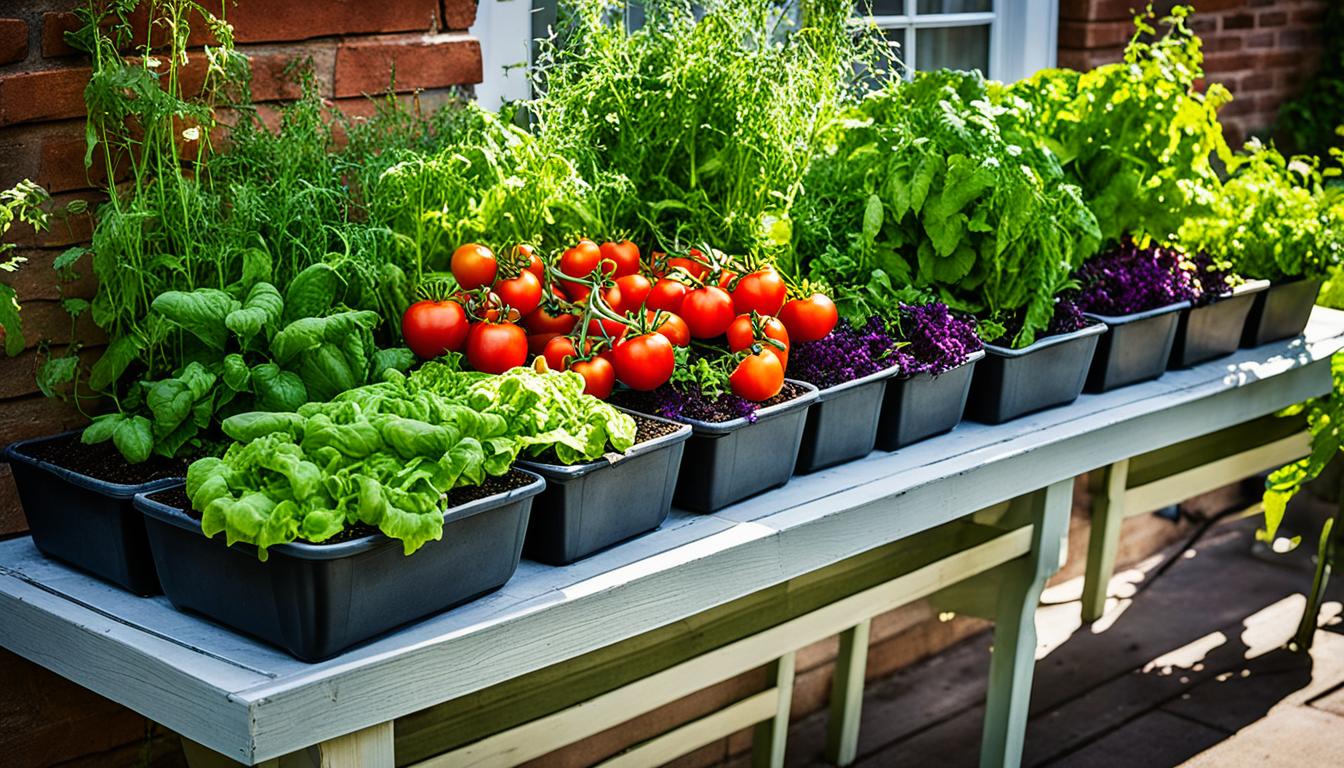
Gardening lovers, listen up! You don’t need a big garden to grow your own veggies. Container gardening is perfect for small balconies, patios, or tight spaces. We’ll give you 10 key tips to make your container gardening a success. You’ll love the taste of fresh, homegrown food.
Learn how to pick the best containers and water them right. We’ll also cover how to keep pests away. With our help, you can make a beautiful vegetable container garden in any small spot. Enjoy the fun of urban gardening and small space gardening. Watch your container vegetables grow and enjoy the fresh produce from your own container gardening space.
Introduction to Container Gardening
Container gardening is a great choice for those with little outdoor space. It lets you grow your own veggies, even if you have a small balcony or patio. This method is flexible and easy to set up, making it perfect for anyone wanting to garden.
Benefits of Container Gardening
Container gardening is super flexible. You can control things like soil quality, sunlight, and water access. This is great for city dwellers or those in tough climates. Plus, it’s easier than traditional in-ground gardens, ideal for busy or less able people.
Choosing the Right Containers
There are many types of containers for growing veggies. You can pick from classic terracotta pots to modern self-watering ones. Think about your plants’ size, root depth, and your gardening needs. The right container setup can help you get the most out of container gardening and enjoy a great harvest.
Selecting the Perfect Potting Mix
Choosing the right potting mix is key for your container vegetables’ health and growth. When picking a mix for container gardening, think about a few important factors. These include the mix’s quality, its nutrient content, and how it supports your plants.
Start by finding a top-quality potting mix made for container gardens. These mixes offer the right mix of drainage, air, and moisture your plants need. Don’t use garden or topsoil, as they can pack down and hurt root growth in containers.
Check the mix’s ingredients too. A good mix should have peat moss, compost, perlite, and vermiculite. These add up to a light, draining mix that keeps moisture and nutrients well.
Also, pick a mix that’s pH-balanced, with a pH between 6.0 and 6.8. This is perfect for most vegetables. It makes sure the soil’s nutrients are easy for your plants to use.
With the right potting mix, your container garden will thrive. You’ll get a great harvest from your efforts.
Nature Tips for Healthy Plant Growth
To make your container vegetable garden thrive, you need more than just the right soil and watering. It’s key to think about the natural things that help plants grow strong and healthy. This includes the right amount of sun and how to keep the temperature just right.
Getting enough sunlight is crucial for your plants. Most vegetables need at least 6 hours of direct sun each day. Some, like tomatoes and peppers, need even more. Pick a spot for your garden that gets the right amount of sun for your plants. This helps them grow big, produce lots, and stay colorful.
Temperature is also key for your garden’s success. Each plant likes different temperatures, so check what yours need. Keep your containers safe from too much heat or cold. Use insulation or find a sheltered spot if needed. Watching and adjusting the temperature helps keep your plants healthy.

There are more natural things to think about for a healthy garden. Air flow, humidity, and how you position your containers matter too. Paying attention to these details and making changes as needed helps your plants grow strong and healthy.
Successful gardening is more than just about soil and water. It’s also about understanding and using nature’s help for your plants. By using these tips, you’ll be on your way to a garden full of tasty and beautiful plants.
Watering Techniques for Container Plants
Proper watering is key for a successful container vegetable garden. It’s important to find the right balance to avoid harm to your plants. Knowing how much water your plants need and spotting signs of too much or too little water helps keep them healthy.
Signs of Overwatering and Underwatering
Too much water can cause root rot, yellow leaves, and even kill your plants. Look out for wilting leaves, water pooling in the container, and a sickly look. Underwatering makes leaves dry, brittle, and can stunt growth. It also reduces the amount of fruits or veggies your plants produce.
Water your container vegetables when the top inch of soil feels dry. This usually means watering every one to three days. Consider the size of your container, the type of plant, and the weather to adjust your watering schedule.
Watching your plants closely and adjusting your watering helps avoid over or underwatering. By doing this, you can keep your container garden healthy and full of produce all season.
Fertilizing Your Container Vegetables
Getting the right nutrients is key for your container vegetables to do well. You can choose between organic and inorganic fertilizers. Knowing the good and bad of each can help you pick the best for your garden.
Organic vs. Inorganic Fertilizers
Organic fertilizers like compost, manure, or bone meal give nutrients slowly. They help make your soil healthier and stronger. These natural helpers also boost good microorganisms in the soil. This means better water holding and nutrient uptake for your plants.
Inorganic or synthetic fertilizers give a quick nutrient boost. They work fast, filling any nutrient gaps quickly. But, they might not help the soil as much as organic options do over time.
Think about what your plants need when picking between organic and inorganic fertilizers. Some plants, like tomatoes and peppers, do well with fast nutrients. Leafy greens and root crops often prefer slower nutrient release from organic sources.
No matter your choice, always follow the instructions and use the right amount of fertilizer. Too much can cause nutrient imbalances and hurt your plants.
Pest Management in Container Gardens
Keeping a healthy container vegetable garden means being careful with pest control. Pests like aphids, spider mites, whiteflies, and sometimes caterpillars or slugs can harm your plants. It’s important to manage pests well to help your container vegetables grow.
Preventing pests is a great way to keep your container vegetables safe. Check your plants often for signs of pests, like leaves that look unhealthy, webs, or insects. Catching problems early can stop them from getting worse.
For organic pest management for container plants, try using things like insecticidal soap, neem oil, or helpful insects like ladybugs or lacewings. These natural methods can get rid of pests without hurting your plants or the environment.

Encouraging biodiversity is another good way to manage pests in container gardens. Planting different flowers, herbs, and companion plants can draw in natural predators that eat pests. This helps keep your garden balanced and cuts down on the need for harsh chemicals.
By being watchful, using organic pest control, and creating a diverse garden, you can control pests in your container vegetables. With some effort and the right methods, you can keep your plants healthy and enjoy a good harvest all season.
Companion Planting for Container Gardens
Boost your container garden with companion planting. This method pairs plants together for better growth and health. By choosing the right plant friends, you get more produce, fewer pests, and better nutrients.
Companion planting makes the most of small spaces. Pick plants that work well together and fill your container nicely. For example, tall vines and short herbs make a great pair, adding height and efficiency.
It also helps control pests naturally. Plants like marigolds keep bugs away from your veggies. Others attract good bugs, like ladybugs, which eat pests. This creates a balanced garden ecosystem.
Think about pairing plants like tomatoes with basil, or carrots with radishes. These combos taste great and help each other grow by sharing nutrients and space.
Using companion planting makes your garden more lively, productive, and safe from pests. Try out different plant pairs, watch how they work together, and enjoy a healthy, balanced garden.
Maximizing Space in Container Gardens
If you’re growing vegetables in containers, making the most of your space is crucial for a big harvest. There are many ways to use your container gardening space wisely. One great method is vertical gardening, which lets you grow plants up instead of out.
Vertical Gardening Ideas
Vertical gardening is a smart way to save space in your containers. Use trellises, cages, or wall-mounted planters to grow plants like tomatoes, cucumbers, and beans up high. This frees up space on the ground. Or, stack pots or use multi-tiered planters for a vertical garden that uses space well.
Choosing dwarf or compact vegetable varieties is another smart move. These plants are made to grow well in small spaces. Look for bush-type tomatoes, mini peppers, or compact eggplants to grow more in less space.
Using vertical support structures like teepees or A-frame trellises is also a good idea. Grow pole beans, peas, or vining squash up these structures. This saves floor space and keeps plants tidy, reducing disease and pest risks.
By using these smart gardening tips, you can make your container garden more productive, even in small spaces. Vertical gardening, choosing compact plants, and using vertical supports are great ways to use your space well.
Harvesting and Enjoying Your Homegrown Veggies
Congratulations on your bountiful container garden! It’s time to pick your fresh, flavorful vegetables. Start by carefully picking them, making sure to handle them gently. This helps keep their delicate nature intact.
After picking, it’s time to enjoy your homegrown veggies. Add them to salads, stir-fries, or any dish you like. You can do so much with them! Enjoy the unique taste and health benefits of your own veggies.
Think about preserving some of your veggies for later. You can freeze, can, or dehydrate them. This way, you can enjoy their flavors even when the growing season is over. With a bit of creativity, you can make delicious meals with your container-grown produce.