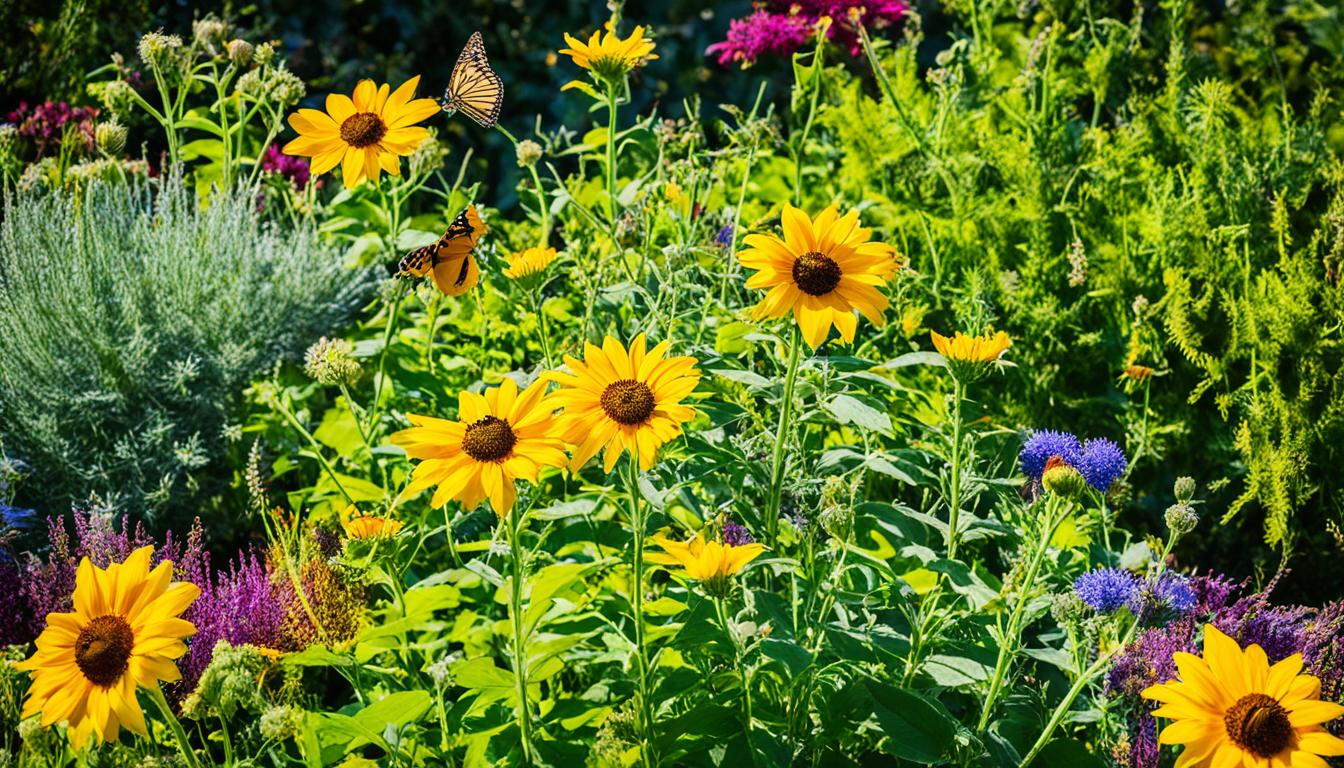
Native plants can turn your garden or landscape into a thriving oasis. They boost local biodiversity and add a low-maintenance charm. These plants are perfect for eco-conscious homeowners and gardeners.
Native plants are well-suited to the local climate and soil. They need less water, fertilizer, and care than other plants. This makes them great for water-wise and sustainable gardening.
By choosing native plants, you’ll make your outdoor space beautiful and help the environment. These plants are food and homes for native pollinators and wildlife. They keep our ecosystems healthy.
As you grow native plants, you’ll see nature’s diversity come back to your yard. It’s a way to support the local ecosystem and enjoy nature’s beauty.
Embracing Nature’s Wisdom: The Allure of Native Plants
Gardening with native plants connects you to nature and supports local ecosystems. These plants have adapted to your area’s climate and soil over time. They bring many benefits for those who care about the planet.
Native plants are key to local ecosystems, offering food and shelter for wildlife. Adding them to your garden helps birds, butterflies, and other pollinators. These plants need less water and care than non-native plants, making them great for eco-friendly gardens.
Native species are tough and can handle your area’s climate and soil. This means your garden will need less work to stay beautiful. Choosing native plants helps you garden sustainably and reduces your impact on the environment.
Starting a new garden or updating an old one? Think about using native plants. You’ll find everything from colorful wildflowers to tall trees. These plants make your garden unique and show off your area’s natural beauty and strength.
Low-Maintenance Beauty: Native Plants for Effortless Gardening
Creating a lush garden is easy with native plants. They are tough and perfect for those who want a low-maintenance garden. These plants need little care but can make your garden look great.
Drought-Tolerant Marvels
In areas where saving water is important, native plants are a great choice. They use less water than other plants. By using them, you can cut down on water use and keep your garden looking good, even when it’s dry.
This helps the environment and makes gardening easier. You can enjoy your garden more without spending a lot of time on it.
Pest-Resistant Powerhouses
Native plants have grown in your area for a long time. They have natural ways to fight off pests and diseases. This means you won’t need to use many chemicals in your garden.
You can enjoy your garden more, knowing it’s healthy and balanced. This is good for you and the local wildlife too.
Using native plants makes gardening easy and helps the environment. Whether you want plants that don’t need much water or ones that keep pests away, native plants are a great choice. They make gardening simple and sustainable.
Nature’s Sanctuary: Native Plants and Wildlife Habitats
Adding native plants to your yard helps create a home for local wildlife. These plants are key to supporting many species, including bees and butterflies. They give them food and shelter, helping the environment and its creatures.

Native plants have grown with the local animals, forming important relationships. They provide nectar and pollen that animals need to live. By choosing native plants, you can draw in many birds, insects, and animals, making your area more diverse.
Native plants are more than food and shelter. They are vital homes for creatures like butterflies and moths. Their young need these plants to survive and grow. By using native plants, you help these animals and keep the ecosystem balanced.
Using native plants makes your garden look good and helps the environment. By focusing on native plants, you help save biodiversity. You create a strong, healthy place for nature in your own yard.
Conserving Our Heritage: Native Plants and Biodiversity
Preserving native plants is key to keeping our ecosystems healthy. These plants are vital for biodiversity, which is crucial for the well-being of our natural world. By using native species, we protect our natural heritage for future generations.
Preserving Genetic Diversity
Each native plant is unique, with a genetic makeup shaped by the local climate and soil. This diversity helps our ecosystems stay resilient. It lets plants adapt to changes and fight off pests and diseases. So, by saving native plants, we protect our ecosystems’ health.
We can all help by being good environmental stewards. By choosing native plants for our gardens, we support biodiversity. This way, we help keep our natural world thriving for years to come.
Nature Tips: Incorporating Native Plants into Your Landscape
Using native plants in your garden is a great way to garden sustainably. These plants are tough, need little care, and help local ecosystems and wildlife. By following these tips, you can easily add native plants to your garden and make a green haven.
First, look up native plants that do well in your area’s climate and soil. This makes sure your plants will grow well without needing a lot of water or care. Native plants are often good at surviving on their own, so they’re easy to care for.
When planning your garden, group native plants together to look natural. This makes your garden look better and helps create a home for local pollinators and wildlife. Use different types of native plants, like flowers and grasses, to make your garden interesting.
Feel free to be creative with your native plants. Think about adding plants you can eat, like blueberries or serviceberries, to your garden. Using native plants makes your garden a beautiful, easy-care place that celebrates nature.
Resilient Roots: Native Plants and Climate Change
Native plants are a key solution as the climate changes. They’ve adapted to the local environment over time. This makes them more resilient and ready for changing weather and stressors. Using native plants helps create landscapes that can handle climate change better.
Adapting to Changing Conditions
Native plants have developed ways to deal with climate changes. They can survive droughts, soil changes, and temperature shifts. Adding native plants to your garden makes it sustainable and adaptable for the future.

Native plants are also vital for local ecosystems and biodiversity. As climate change affects these habitats, native plants offer food and shelter for wildlife. By growing different native species, you help pollinators and other animals, making your garden a haven for nature.
Choosing native plants is smart and shows respect for your local area. As climate change worsens, native plants will be crucial for sustainable landscapes. They help your outdoor spaces face the future challenges.
Homegrown Havens: Native Plants for Urban Spaces
In the heart of cities, native plants can make green spaces that support life. They fit well in rooftop gardens and community areas, bringing many benefits. These plants help people and the planet.
Native plants do well in city life, even with limited soil, water, and sunlight. Using them, city folks can make their areas green and easy to care for. This helps local wildlife and makes cities more sustainable.
Native plants also help city folks connect with nature. By adding these plants to city areas, cities become lively and green. This encourages people to value nature’s beauty and diversity.
Native plants are great for making city spaces green and full of life. They’re perfect for rooftop gardens or community gardens. By using native plants, we can make cities better places to live. They help our well-being, support nature, and make cities healthier.
Nature’s Bounty: Edible Native Plants
Many native plants in the United States are not just beautiful but also edible. Adding these plants to your garden lets you taste the local flavors. It also helps support local food systems and biodiversity.
Foraging for Local Flavors
Foraging for native edible plants is a time-honored tradition that’s gaining popularity. You can find everything from tangy wild sorrel to crunchy cattail stems. These plants can make your meals more exciting and connect you to your local environment.
Foraging is more than just finding food. It’s a way to connect with nature and appreciate the plants around you. As you learn about these plants, you’ll want to protect and care for them. This helps your local ecosystem stay healthy and strong.
Whether you’re experienced or new to foraging, using native edible plants in your cooking is rewarding. You’ll enjoy the unique tastes of your area and help the planet at the same time. These plants are not only tasty but also good for you and the environment.
Nurturing Nature’s Gifts: Growing Native Plants Responsibly
When we grow native plants, we must do it with care. This means getting them from trusted sources. It helps protect the delicate balance of nature.
Using sustainable methods like growing from seeds or cuttings helps too. It keeps the plant variety rich and supports local ecosystems. Plus, it cuts down on the need for long trips to get plants.
Gardeners who use native plants are key to keeping our world healthy. By taking good care of these plants, we help them thrive. And we make sure they will be there for others to enjoy in the future.