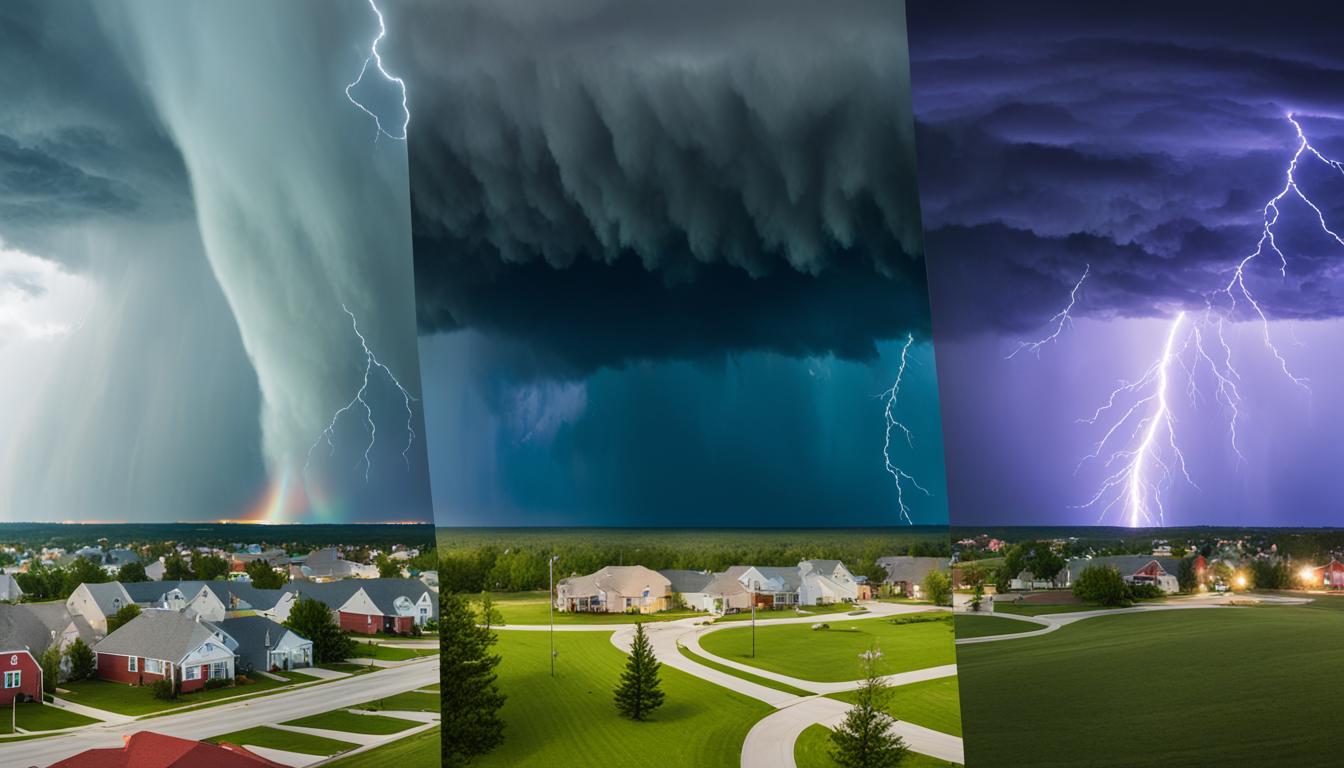
Weather is a fascinating and ever-changing part of our world. It has always caught our attention. From the stunning dance of lightning to the beautiful rainbows, nature is full of amazing weather wonders. This article shares 10 fun facts that reveal the secrets behind different weather events.
Did you know lightning can get hotter than the sun’s surface? Or that rainbows are more than just pretty? They happen when sunlight goes through water droplets in the air. Get ready to be amazed as we explore the world of weather and find out some surprising facts.
Get ready to wow your friends and family with cool weather facts. This article is perfect for anyone interested in the natural world. It takes you on a journey of discovery, showing you the amazing things that happen in the sky.
Unraveling the Mysteries of Weather
Weather is a fascinating field that’s always changing. It’s full of mysteries that scientists and weather lovers find intriguing. By studying weather science, we learn about the atmospheric phenomena that shape our world.
Dive into the Intriguing World of Atmospheric Phenomena
Lightning shows in the sky and clouds form in amazing ways. These events are part of the atmosphere’s beauty. By looking at temperature, pressure, and moisture, we can understand these weather events better.
Studying things like tornadoes and snowflakes helps us grasp our changing climate. The study of atmospheric phenomena is key to understanding our weather.
Discover Captivating Insights About the Air Around Us
The air we breathe is not just invisible; it’s dynamic and changes often. It’s crucial for our weather. By exploring air composition, we learn how gases and particles affect the weather.
Understanding greenhouse gases and air pollution is important. It helps us know more about weather science and meteorology.
The Power of Lightning Strikes
Lightning is a stunning natural event that happens during thunderstorms. It shows the huge power of electricity in the sky. These bright flashes come from electrical processes high above Earth.
When clouds meet and electrical charges grow, the air gets ionized. This leads to a powerful electric current. It can get hotter than the sun’s surface.
Lightning strikes are incredibly strong. They can carry up to 1 billion volts and have a peak current of 200,000 amperes. This makes lightning a big danger, causing damage to people and buildings. It can start wildfires and house fires, showing its destructive power.
Knowing how lightning works is key to staying safe in storms. Electrical charges in the sky create a path for the current to flow from clouds to ground. This fast electricity discharge is what we see as lightning. The loud thunder comes from the air expanding fast because of the lightning’s heat.
Lightning is a big threat whether you’re outside or inside. Being careful and taking safety steps, like finding shelter and avoiding open areas, can lower the risks. By understanding lightning’s power, we can get ready and keep safe during these storms.
Fun Facts About Rainbows
Rainbows are nature’s most captivating and colorful sights. They are not just beautiful but also interesting from a science point of view. Let’s dive into some cool facts about rainbows and how they form.
Nature’s Vibrant Display of Color
The science behind rainbows comes from sunlight and water droplets in the air. When sunlight goes through these tiny droplets, it bends and spreads out, creating the colors we see in a rainbow. This happens because of how light acts when it meets different materials.
The colors of a rainbow appear in a specific order, with red on the outside and violet inside. This order comes from how different light wavelengths bend in the water droplets. This bending is called atmospheric optics.

Rainbows are more than just pretty sights. They teach us about the science of rainbows and the natural wonders of our world. They help us understand how water droplets and light work together to create these colorful displays. Rainbows show us the beauty of our colorful weather and the atmospheric optics that shape our world.
Harnessing the Wind’s Energy
The wind is a strong and endless source of energy. It can be used to make electricity. As we look for ways to use energy without harming the planet, wind power is becoming more important.
Unlock the Potential of Renewable Power
Wind turbines are key to using wind power. They turn wind’s energy into electricity. This electricity can then power our homes and businesses. How well wind turbines work depends on the wind in the area. Stronger and steadier winds mean more energy made.
Wind farms are groups of wind turbines in windy places. They make a lot of electricity. This helps us use more renewable energy. As technology gets better, wind turbines and farms will make more and better energy.
Weather affects how well wind power works. The speed, direction, and steadiness of the wind change how much energy wind farms make. To get the most from wind power, we need to plan carefully. We must think about the local weather and climate.
Fun Facts: Exploring Weather Extremes
The Earth’s weather can sometimes hit extreme levels, showing us amazing climate anomalies. This section looks at some cool facts about weather extremes. We’ll cover everything from the hottest and coldest temperatures to the most intense severe weather events and natural disasters.
Did you know the hottest temperature ever recorded was 156°F (69°C) in Death Valley, California, in 1913? This shows how some places can get really hot. On the other side, the coldest temperature was -129°F (-89°C) in Vostok, Antarctica, in 1983. These extremes show how diverse our planet’s weather can be.
Weather extremes aren’t just about temperature. Severe weather events can also be extreme. The most intense tropical cyclone on record was Super Typhoon Tip, with winds of 190 mph (310 km/h) in 1979. And the most rain in one day was in Cherrapunji, India, with 1,069 mm (42 inches) in 24 hours.
These extremes show how powerful and unpredictable our planet’s climate can be. By learning about these fun facts, we appreciate the Earth’s weather diversity and complexity. We also see the importance of understanding and preparing for climate changes in the future.
The Art of Weather Forecasting
Predicting the weather is a complex science that’s always changing. It uses advanced tech and science to study weather patterns and make reliable forecasts. From satellites to complex models, the art of forecasting the weather is both fascinating and important.
Demystifying the Science Behind Predictions
Meteorologists use lots of data and advanced models to understand the weather. They look at temperature, humidity, air pressure, and wind patterns. This helps them predict the weather for the future.
The science of forecasting is a mix of atmospheric science, modeling, and data analysis. Meteorologists use complex models to simulate the atmosphere and predict the weather. These models consider many factors, from global patterns to local conditions, for accurate forecasts.
New tech in weather prediction, like high-resolution satellites and AI models, has made forecasts more accurate. Now, people and industries can make better decisions with detailed and timely weather info. This helps with everything from farming to getting around.

Forecasting the weather is an ongoing task. Meteorologists keep improving their methods with new discoveries. By understanding the science behind forecasts, we see how crucial they are for our daily lives and the environment.
Cloud Formations: Nature’s Canvas
The sky is always changing, with clouds making it look different every day. They act like brushstrokes on a canvas, painting the weather. Each cloud type has its own look and plays a big part in the weather.
Clouds range from thin cirrus to big cumulonimbus clouds. Each type is important for the weather. They help shape the weather patterns we see.
Watching the sky, we see how dynamic our atmosphere is. Clouds help us predict the weather, like rain or wind. By understanding clouds, we appreciate the beauty and complexity of nature’s sky.
The Impact of Weather on Ecosystems
Nature’s balance is closely tied to the changing weather and climates we see. Weather and climate shape the ecosystems around the globe. It’s key to understand this link to keep our natural places healthy and strong.
Adapting to Shifting Weather Patterns
From the warm rainforests to the cold tundras, living things have amazing ways to survive. With climate change, these places and their animals must adjust. They might move, change their breeding times, or evolve to fit the new weather.
Disrupting the Delicate Balance
Severe weather like big storms, droughts, and floods can really hurt ecosystems. This can lead to fewer species, declining populations, and damaged homes. It’s vital to know how weather and climate change affect life in ecosystems to find ways to deal with these issues.
Looking into how weather, climate, and nature are connected shows us how important our ecosystems are. They’re key to our planet’s health. By learning about weather’s effects, we can work to keep nature’s balance and protect life on Earth.
Weird Weather Phenomena Explained
The natural world is full of strange weather events that capture our attention. We’ll explore the science behind these odd weather happenings. This will help us understand the unique processes that create these unusual events.
“Sun dogs” are one of these wonders, showing up as colorful spots next to the sun. They happen when sunlight goes through ice crystals in the air. These crystals bend and split the sun’s rays, making the beautiful, halo-like colors we see.
“Ball lightning” is another fascinating sight, looking like a glowing ball during storms. Scientists are still figuring out what causes it, but they think it might be related to electrical charges in the air. These strange sights amaze and inspire us all.