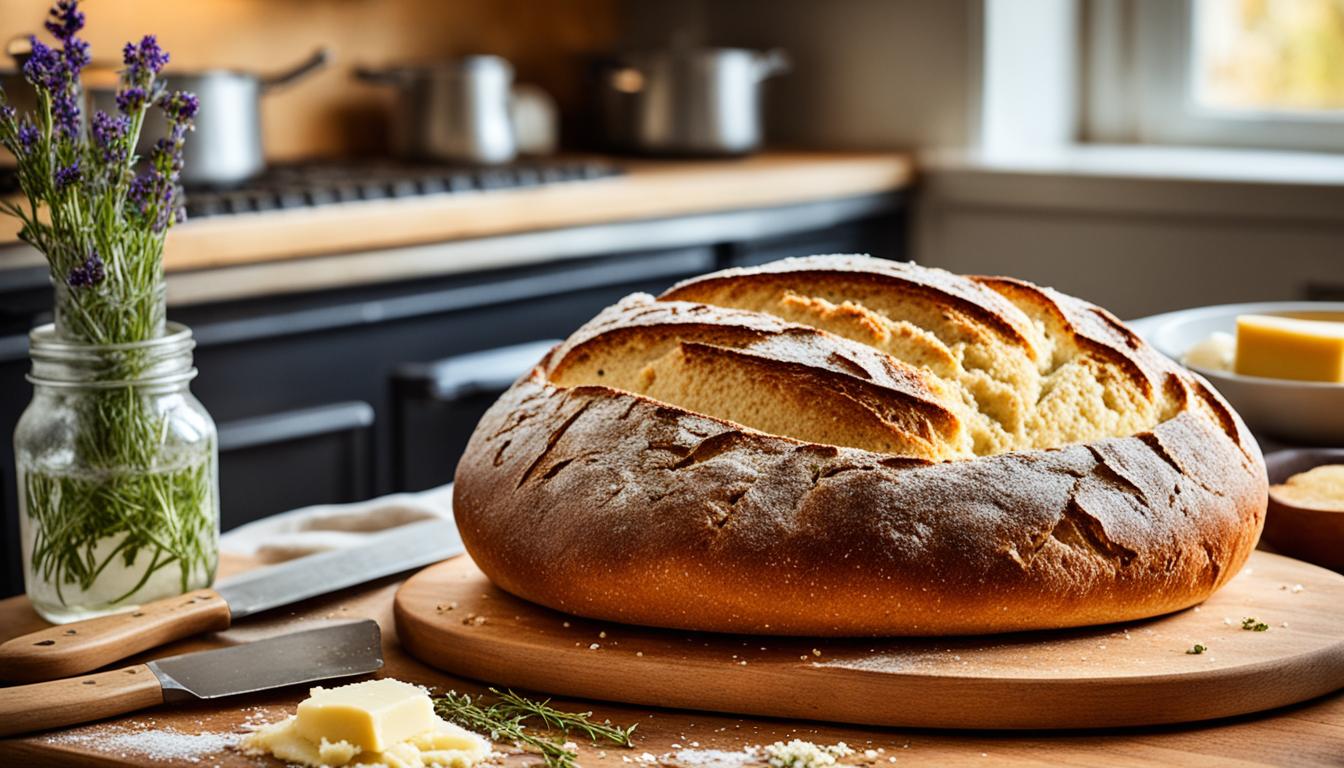
Welcome to the world of homemade bread baking. Here, the air is filled with the sweet smell of fresh loaves. The joy of making your own food is unmatched. This guide will teach you the key steps and techniques for baking delicious homemade bread.
It doesn’t matter if you’re just starting or if you’re already skilled at baking. You’ll learn the secrets to making perfect loaves that will wow your loved ones and impress bread lovers everywhere.
This guide covers everything from the basics of ingredients to kneading, proofing, and baking. You’ll gain the skills and confidence to become a bread-baking expert. Get ready to improve your bread-making skills and create artisanal loaves that will fulfill your cravings for the best bread.
Introduction to Homemade Bread Baking
Baking your own bread at home is rewarding. It lets you make fresh loaves and enjoy many benefits. These include saving money and controlling what goes into your bread.
Benefits of Baking Bread at Home
One big plus of homemade bread is choosing your ingredients. You can pick top-quality ingredients and skip preservatives. This makes your bread healthier and lets you follow your diet.
Also, making your own bread saves money. With the right tools and practice, you can make tasty bread cheaper than store-bought. This helps you cut down on grocery costs over time.
Essential Bread Baking Tools and Ingredients
To start with homemade bread, you need some key tools and ingredients. A strong mixing bowl, a good bread machine or stand mixer, and a quality loaf pan are must-haves. For ingredients, you’ll need flour, yeast, water, salt, and any extra flavors you like.
With the right tools and ingredients, you can become a great home bread baker. Whether you like making your own bread or saving money, exploring homemade bread baking is rewarding.
Bread Baking Basics: Understanding the Ingredients
Learning to make homemade bread starts with knowing the key ingredients. These include everything from different flours to the important role of yeast. Let’s explore the basics of bread making and find out how to get tasty results every time.
Types of Flour for Bread Baking
The flour you pick is crucial for your bread’s texture and structure. All-purpose flour is a good choice for many recipes. But, trying specialty flours can give your bread a special taste. Whole wheat flour adds a nutty flavor and more fiber. Bread flour, with its high protein, makes the crumb chewier.
Using a mix of flours can also make your bread stand out.
The Role of Yeast in Bread Making
Yeast makes bread rise and gives it a light, airy texture. It eats the sugars in the dough and produces carbon dioxide. This makes the dough expand and get its unique feel. Knowing about active dry, instant, or fresh yeast and their proofing times helps you get the perfect rise.
Understanding these key ingredients will help you bake amazing bread at home.
Mastering the Kneading Technique
Kneading is a key step in bread baking. It’s important to know how to do it right to get the gluten structure right. This makes the dough smooth and elastic. You can use your hands or a stand mixer to knead, but knowing how is crucial for the right texture and rise in your bread.
When kneading bread, aim to make the dough smooth and elastic. This process develops the gluten, which is key for the bread’s structure and rise. Start by mixing the ingredients, then use a kneading motion to stretch and fold the bread dough over itself.

For a hands-on method, push the dough away from you with your heel, then fold it back. Keep doing this, turning the dough a quarter turn each time. This motion creates the right texture.
Or, you can use a stand mixer with a dough hook. Set it to medium speed and let it knead for 5-10 minutes until smooth. This is great for those who don’t want to knead by hand or are making a lot of dough.
No matter how you knead, aim for the “windowpane test.” Stretch a small piece of dough. If it stretches thin enough to see light through without tearing, it’s ready for the next step.
Proofing: The Key to Light and Airy Bread
Proofing is a key step in baking that can change your bread’s texture. It lets the dough rise, which is crucial for its structure, smell, and taste. This process turns simple ingredients into a light, airy, and delicious loaf.
Creating the Perfect Proofing Environment
For successful bread proofing, you need the right environment. The temperature and humidity should be just right, depending on the bread type. Aim for a warm, moist place that helps yeast work well.
Using your oven is a great way to create this environment. Preheat it, then turn it off and put your dough inside. The warm air inside will help your bread rise. Or, you can use a proofing basket or a dedicated bread proofer for the best conditions.
If you don’t have special equipment, don’t worry. You can proof your dough in a warm, draft-free spot. Try placing it on top of the refrigerator or near a sunny window. Just watch it closely and adjust the temperature or humidity if needed to help your bread reach its best.
Food & Recipes
Get ready to explore a delicious collection of bread recipes you can make at home. Whether you’re an expert baker or just starting, there’s something for everyone. You’ll find everything from classic white bread to whole wheat and specialty breads.
Discover the joy of bread baking and get creative in the kitchen. There are many recipes to try that will satisfy your cravings and wow your family and friends. Imagine the smell of fresh bread filling your home and the joy of making your own artisanal loaves.
Start your bread baking journey and learn to make your own bread from scratch. Our selection of recipes includes everything from classic white to specialty loaves. Get ready to improve your homemade bread and impress everyone with your skills.
Looking for a simple sandwich loaf or something more complex? We have the perfect recipe for you. Try different flours, add-ins, and techniques to find your bread-making style. Let your creativity and skills in bread baking shine.
Shaping and Scoring Bread Loaves
Learning how to shape and score bread is key to making professional-looking homemade bread. The way you shape and score your dough affects the look and feel of your bread. By trying different shaping techniques and scoring methods, you can improve your bread baking skills.
Bread Shaping Techniques
One easy way to shape bread is the simple loaf shape. Just divide the dough into equal parts, shape them into logs, and put them seam-side down in a loaf pan. For a more artistic look, shape the dough into round boules or oval batards. These shapes add beauty and can make a unique, rustic crust.
For those who like to experiment, try braiding or making decorative patterns. Braided breads like challah or babka look elegant. Scoring designs, such as cross-hatches or leaves, can turn a simple loaf into a masterpiece.
Choosing a shape is up to you, but remember to handle the dough gently. Avoid over-kneading or punching it down too much. This can make the bread dense and heavy.
Baking Bread to Perfection
Making the perfect loaf of bread at home is all about baking skills. To get that golden crust and soft crumb, you need to know the right bread baking temperature and baking time. These tips are great for both new and experienced bakers looking to make perfect bread.
Oven Temperature and Baking Times
The best bread baking temperature depends on the bread type. Usually, preheat your oven to 400°F to 450°F. This heat makes a great crust, keeps moisture in, and gives that crunchy texture. For most loaves, bake for 20 to 30 minutes, adjusting if your dough is bigger or smaller.
For denser breads like sourdough or whole wheat, bake for 30 to 45 minutes. This ensures they’re fully cooked inside. For lighter breads, such as brioche or challah, use a lower bread baking temperature of 375°F and bake for 15 to 20 minutes.
To make sure your loaves are perfect, watch them closely while they bake. Use an oven thermometer to check your oven’s temperature. Adjust the bread baking temperature and baking time as needed for that golden crust and soft inside that everyone loves.
Troubleshooting Common Bread Baking Issues
Baking bread at home can be rewarding, but it’s not always easy. Even experienced bakers face challenges like dense loaves or uneven baking. Don’t worry, you can fix these problems with the right techniques. This way, you’ll make delicious homemade bread every time.
One big issue is bread coming out dense or heavy. This might happen if you over-knead the dough, use the wrong flour, or don’t let it rise enough. To fix this, try kneading less, using a lighter flour, or letting the dough rise longer before baking.
Another problem is overproofing, which makes loaves collapse or look odd. This happens when dough rises too long, breaking down the gluten. To avoid this, watch the dough closely and bake it when it’s just the right size.
Sometimes, bread doesn’t bake evenly. This could be due to oven temperature, loaf position, or the baking dish used. For even baking, rotate the loaf while it’s baking, use a baking stone or steel, and adjust the oven temperature if needed.
By solving these common bread baking problems, you can make amazing homemade bread. Keep trying new things and don’t give up. With practice, you’ll soon be a bread baking expert.
Storing and Preserving Homemade Bread
Baking bread at home is rewarding, but knowing how to store it is key. Proper storage keeps your bread fresh and tasty. It lets you enjoy your homemade loaves for days or weeks.
Freezing and Reheating Bread
Freezing is a top way to keep homemade bread fresh. Just let the bread cool, then wrap it in plastic or a freezer bag. When you want to eat it, reheat it in the oven or toaster. This brings back the crispy crust and soft inside.
To reheat, use the oven or toaster. For the oven, heat it to 350°F (175°C) and put the bread on the rack for 5-10 minutes. For the toaster, toast the slices until they’re hot. Your bread will taste fresh and delicious, like new.

These tips help you keep your homemade bread fresh for longer. Whether freezing a loaf or reheating slices, your bread stays tasty. Enjoy the taste of your effort for days or weeks.
Bread Variations and Flavors
Take your bread baking to the next level with flavored bread, mix-ins, and specialty recipes. Explore the world of seeded, nutty, and herb-infused loaves. These options let you create unique and tasty homemade bread.
Adding Seeds, Nuts, and Other Mix-Ins
Add texture and taste to your homemade bread with seeds, nuts, and mix-ins. Try sunflower seeds, sesame seeds, or chopped walnuts for crunch. Mix in grated cheese, chopped olives, or fresh herbs for more flavor.
Experiment with different mix-ins to make your own signature bread. The goal is to find the perfect balance. Start with a little and add more until it’s just right.
Adjust the baking time and temperature to get the best results. This ensures your bread is evenly baked and has a great texture.
Looking for a nutty, seedy, or savory twist on your bread? The world of bread variations and flavors is full of possibilities. Let your creativity shine and improve your homemade bread with these mix-in ideas.
Healthy Bread Baking Alternatives
Looking for healthier bread options? This section has you covered with alternative baking methods and ingredient swaps. Discover the rich textures and nutty flavors of whole grain breads. Learn how to make gluten-free loaves for those with dietary restrictions or sensitivities.
Enjoy nutritious bread recipes that let you make homemade bread while focusing on your health. Use whole wheat flour, oats, and ancient grains to make bread full of nutrients. Bake your own healthy bread recipes that fit your diet and lifestyle.
Want to cut down on gluten or try whole grain bread? This section will show you how to make these nutritious breads. Learn to bake gluten-free bread that’s tasty and easy to make. Discover how to make bread that’s good for you and tastes great.