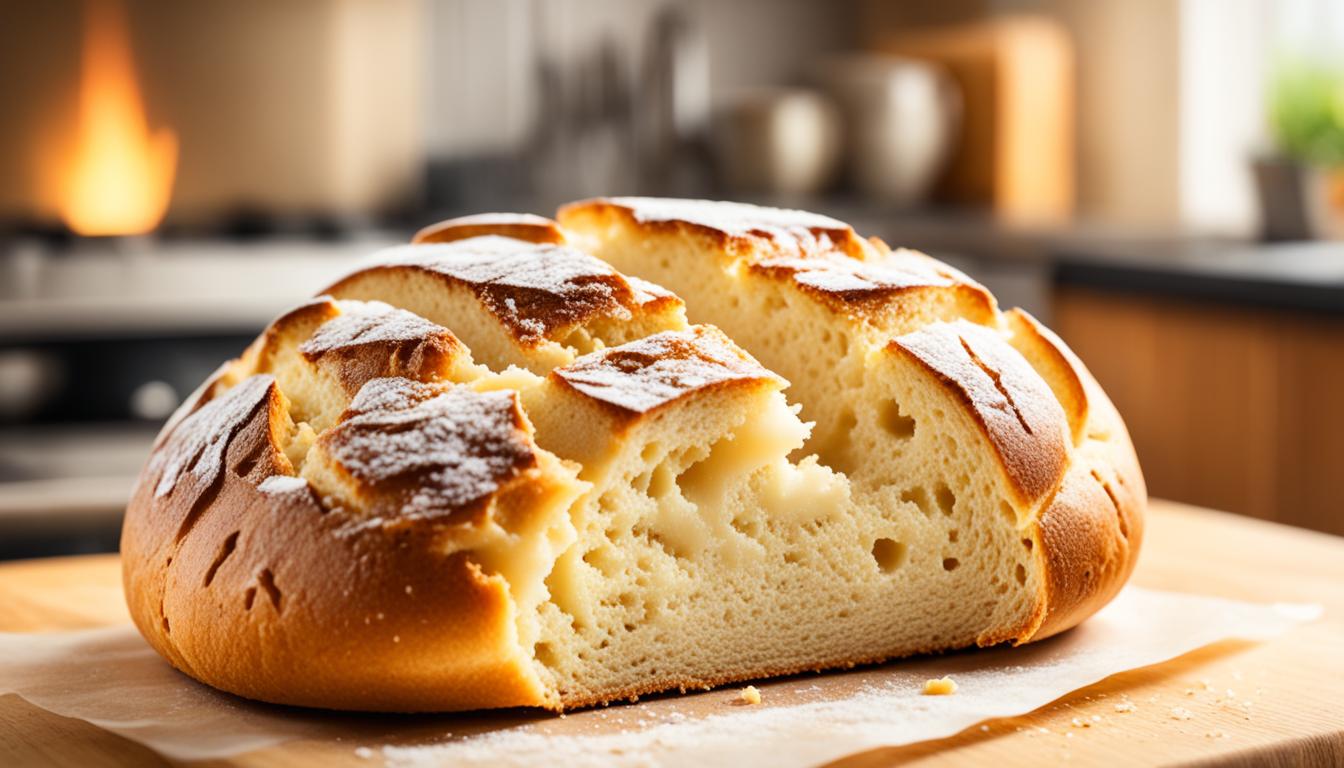
Start a delicious journey and learn the art of making homemade bread. This guide is perfect for both experienced bakers and beginners. It will show you how to make the tastiest loaves from scratch. You’ll find recipes for everything from classic sourdough to soft dinner rolls.
These recipes are sure to make your taste buds happy. You’ll become a master baker, impressing everyone with the amazing smell and taste of your homemade bread.
Mastering the Art of Homemade Bread Baking
Baking homemade bread is a tradition that fills your kitchen with the smell of fresh bread. To get good at it, you need to know the main ingredients and techniques. Let’s look at the basics of making bread at home and how to get a great crust and soft inside.
Essential Ingredients for Delicious Bread
Great bread starts with flour, yeast, and water. The flour type, like all-purpose or whole wheat, changes the bread’s texture and taste. Yeast makes the bread rise and gives it a light crumb. Water mixes the dough and helps gluten develop.
Getting the bread right means balancing these ingredients well. Try different flour ratios, proofing times, and kneading methods to improve your skills.
Kneading Techniques for Perfect Texture
Kneading is key in making bread. It develops the gluten in the dough, making the bread tender and chewy. You can knead by hand or with a mixer. The aim is to make the dough smooth, elastic, and keep its shape.
Using techniques like the “stretch and fold” or “window pane” test can help you get the right texture. Paying attention to the dough’s feel and development during kneading is crucial.
Learning about the main ingredients and kneading can help you bake bread with a great texture. Your family and friends will love it.
Classic Bread Recipes for Every Occasion
Homemade bread makes any event special, from cozy family times to fancy dinner parties. Explore classic bread recipes that will wow your guests and fill your kitchen with the scent of fresh bread.
Begin your day with a warm sourdough loaf, great with avocado or your favorite jam. For a cozy brunch, try making fluffy buttermilk biscuits or savory herbed focaccia. Impress your guests with classic dinner rolls or a rustic boule for dipping in olive oil and balsamic.
Baking your own bread brings unbeatable smells into your home. It lets you try out different bread types and recipes. Enjoy the process of kneading and proving dough, and get creative with unique flavors and shapes.
These classic recipes are perfect for both experienced bakers and beginners. They’re ideal for all occasions throughout the year. Let the comforting taste of homemade bread inspire you to make unforgettable meals.
Food & Recipes: Exploring Homemade Bread Varieties
Baking homemade bread is a fun and rewarding experience. It lets you try out many different types. From classic whole wheat to new bread recipes, it’s a culinary adventure.
Whole Wheat Bread: A Nutritious Delight
Whole wheat bread is known for its great nutrition and rich taste. Made with 100% whole wheat flour, it has a thick texture and lots of nutrients. This makes it a healthy choice for any meal.
This bread is good for more than just eating. Its high fiber supports digestive health, and its complex carbs give you long-lasting energy. It also has important vitamins and minerals like B vitamins, iron, and magnesium. These nutrients make whole wheat bread a key part of a balanced diet.
Adding whole wheat bread to your homemade bread list is a great idea. It makes your cooking better and keeps you healthy with every bite.

The Science Behind Bread Proofing and Rising
Baking homemade bread is a captivating art. It relies on the science of bread proofing and rising. Yeast, a tiny organism, turns simple dough into a light, airy masterpiece.
The bread proofing stage is where yeast fermentation happens. Yeast eats the dough’s sugars and makes carbon dioxide. This gas gets trapped, making the dough expand and rise. The proofing process’s temperature and time are key to the bread’s texture and taste.
After proofing, the dough enters the rising stage. This is where magic happens. More yeast cells multiply and make more carbon dioxide. This expands the dough, creating the airy crumb we love. The right mix of ingredients, temperature, and time turns a simple mix into a fluffy, delicious loaf.
Knowing the science of bread proofing and rising is key to making great homemade bread. By understanding how temperature, humidity, and fermentation work together, bakers can perfect their techniques. This leads to bread that looks great and tastes amazing.
Troubleshooting Common Bread Baking Problems
Baking homemade bread can be rewarding but not always easy. You might face issues like dense or dry loaves. But, with the right techniques, you can fix these problems and make perfect bread every time.
Preventing Dense or Dry Bread
Dense or dry bread is a common issue. It can happen from over-kneading, using too much flour, or not letting the dough rise enough. To avoid this, pay attention to how you knead, measure ingredients, and let the dough proof.
If your bread keeps coming out dense or dry, try adding more water to your recipe. This can make the bread softer and more tender. Also, don’t over-mix the dough to avoid a tough texture. Letting the dough rise for the right amount is key to perfect bread.
Fixing problems like dense or dry bread will help you become a pro at making homemade bread. With some troubleshooting and careful attention, you’ll enjoy delicious, fluffy loaves every time.
Artisanal Bread Baking: Unleashing Creativity
The world of making bread at home is like a blank canvas. Once you get the basics down, it’s time to show off your skills. By exploring unique bread flavors, you can make your homemade bread even tastier.
Unique Bread Flavor Combinations
Move past the usual white or whole wheat bread. Artisanal bread baking lets you try out many flavors. Add herbs like rosemary, thyme, or oregano for a savory twist. Or, mix in dried fruits, nuts, or chocolate chips for a sweet touch.
The sky’s the limit in artisanal bread baking. Let your creativity shine by mixing unexpected ingredients. This way, you can make unique and delicious homemade loaves. It’s a great way to improve your cooking skills and wow your friends and family with your creativity.

Bread Storage Tips for Maximum Freshness
Keeping your homemade bread fresh is crucial for enjoying it fully. By using expert storage tips, your bread will stay soft and tasty longer. You can store your bread in the pantry, freezer, or refrigerator, each with its own method to keep it tasting great.
Stopping moisture loss is key in bread storage. Bread gets stale and dry if it’s exposed to air. To prevent this, store your loaf in an airtight container or bread box. This keeps the moisture in, helping your bread freshness last for days.
If you want to keep your bread fresh for a long time, the freezer is best. Wrap your loaf in plastic wrap or foil, making sure there are no air pockets. This bread preservation method keeps your bread fresh for up to 3 months. Just thaw it at room temperature when you want to eat it.
When choosing where to store your bread, avoid the refrigerator. The cold, dry air can make your bread stale and hard. Stick with the pantry or freezer for the best results.
Learning how to store bread properly lets you enjoy your homemade bread for days or weeks. Try different methods to see what works best for you and your baking.
Health Benefits of Homemade Bread
Homemade bread is more than just tasty. It’s also a nutritious choice for your meals. By making your own bread, you control the ingredients. This ensures your loaf is full of good stuff.
One big health perk of homemade bread is adding nutrient-rich ingredients. Using whole grains like whole wheat or rye flour increases the fiber. This is key for a healthy gut and a balanced diet. Plus, you can add seeds, nuts, or dried fruits for extra vitamins, minerals, and antioxidants.
Another plus of baking your own bread is managing sugar and sodium levels. Many store-bought breads have too much of these, which can lead to weight gain, high blood pressure, and chronic diseases. Making your own bread lets you cut down on these ingredients, offering a healthier option.
Baking bread also has health benefits. The fermentation process during proofing makes nutrients easier for your body to use. The high baking temperatures break down complex carbs, making them simpler to digest.
Adding homemade bread to your diet is a tasty and healthy move. By picking the right ingredients and baking methods, you can make a bread that’s both delicious and nutritious. It’s a great addition to a balanced diet.
Equipment Essentials for Bread Baking Success
Improving your homemade bread starts with the right tools. Having bread baking equipment and bread baking tools is key. A good loaf pan, Dutch oven, or baking sheet helps with even heat and perfect loaves. Don’t forget a bread lame or banneton for that professional touch.
For delicious bread, you need the right essential bread baking tools. A digital scale for accurate measurements, a thermometer for temperature control, and a strong mixer with a dough hook make bread easy to make. With these bread baking must-haves, you’re on your way to becoming a pro.
Getting the right equipment is just the start. Learning techniques and the science of bread baking will improve your skills. Try different recipes and methods to show off your baking talent. With the right tools and practice, you’ll soon make loaves that rival the bakery’s.