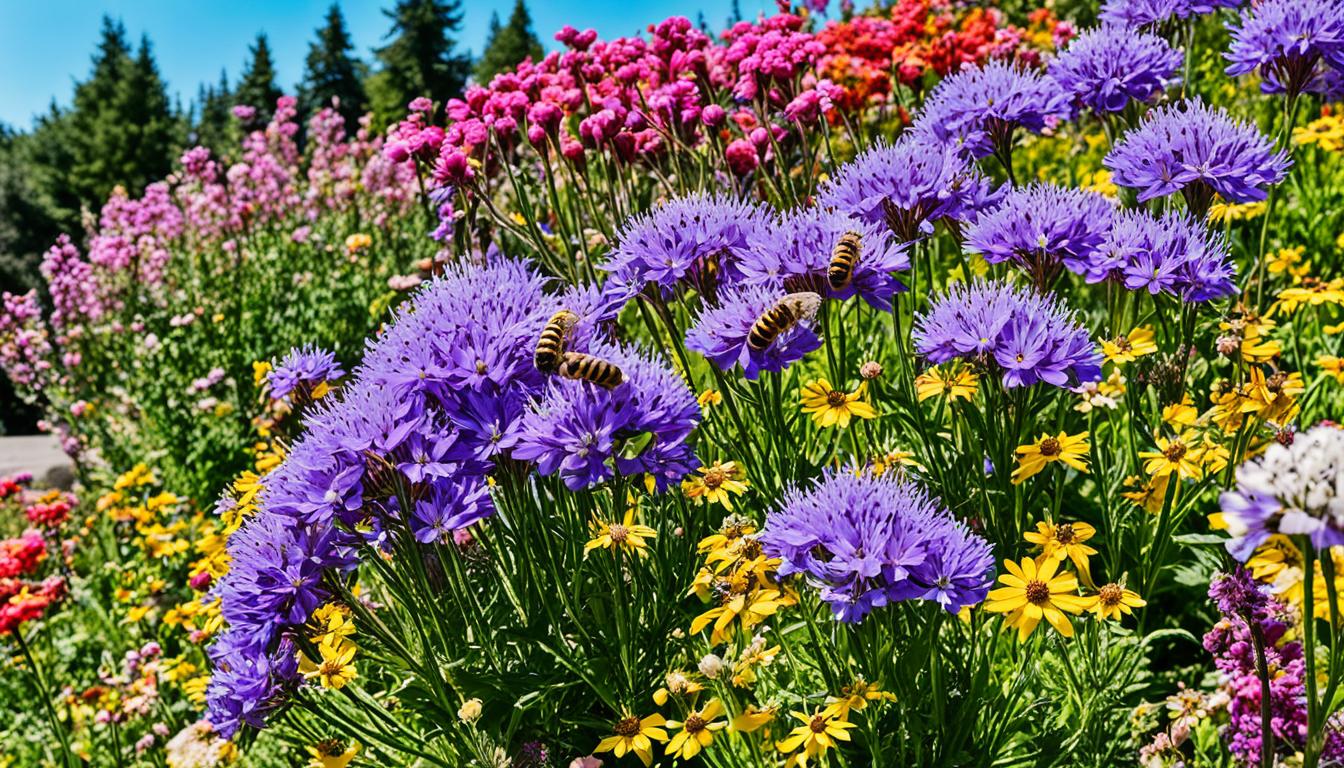
Creating a garden that’s friendly to bees is a great way to help these important insects. By picking the right bee-friendly plants, you can make your garden a place where bees can thrive. Whether your garden is small or big, these plants will draw in bees and make your space look beautiful.
There are many plants to choose from, like native wildflowers and fragrant herbs. These gardening for bees options fit different gardens and help bees. Find out which plants will make your garden a place where bees can live and work.
The Importance of Bees in Our Ecosystem
Bees are key to keeping our environment balanced. They are the main pollinators, helping many plants, fruits, and vegetables grow. Without them, many plants wouldn’t be able to reproduce, which affects many other animals and plants too.
Understanding the Role of Bees as Pollinators
Bees are crucial to our ecosystems. They move from flower to flower, collecting nectar and pollen. This action helps plants fertilize each other, which is key for our food supply. Without bees, many of our favorite foods would be in short supply.
The Alarming Decline of Bee Populations
Bees are disappearing at a worrying rate. Habitat loss, pesticides, and climate change are to blame. This decline threatens our food supply and ecosystem health. It’s vital to protect bees to keep our world healthy.
We need to understand how important bees are to our ecosystem. By addressing the decline of bee populations, we can help protect bees. This will ensure our environment stays healthy for all of us.
Nature Tips: Creating a Bee-Friendly Garden
Turn your outdoor area into a bee paradise with simple steps. You don’t need a big yard to help bees. Just pick the right plants, add water, and give them a place to nest. These easy steps make your garden a safe spot for bees.
Choosing the right plants is key in bee-friendly gardening. Pick native flowers that bloom all season. This way, bees always have food. Sunflowers, lavender, and Echinacea are great choices that bees love.
Don’t forget to give solitary bees a place to nest. They like small spots like hollow stems or wooden blocks. Adding bee houses or leaving some areas wild helps their numbers grow.
Water is vital for bees too. They need clean water to drink and stay healthy. A simple bee waterer, like a shallow birdbath or a stone-filled saucer, is perfect for them.
Follow these easy tips to make your garden a bee haven. You’ll help our ecosystems and enjoy watching these amazing pollinators in your yard.
Vibrant and Colorful Flowering Plants for Bees
Bees love a variety of bright, nectar-rich flowers. When making a bee-friendly garden, pick different plants that bloom all season. These colorful flowers help bees and make your garden look alive.
Selecting Native Plant Species
Native plants are great for bees because they fit well with the local area. They have evolved with local bees, offering lots of nectar and pollen. Adding native plants to your garden helps bees and makes your garden a better place for them.
Beautiful native plants like purple coneflowers, black-eyed Susans, bee balm, and lavender attract bees. These flowers add beauty to your garden and help bees.

Choose a variety of native plants for your garden to keep bees fed all season. This way, you’ll have a constant supply of nectar and pollen for bees. With the right plants, you can make a great place for pollinators in your yard.
Fragrant Herbs that Attract Bees
Gardeners wanting to help bees should add fragrant herbs to their gardens. These herbs not only taste great but also attract bees. By planting these herbs, your garden becomes a busy spot for bees.
Lavender is a top choice for bees. Its purple color and sweet smell draw bees in. Rosemary, with its pine scent, also attracts bees. Thyme, with its small flowers and earthy smell, is another good choice.
Don’t forget about oregano, sage, and marjoram for something different. These herbs come in various colors, textures, and smells. They make your garden both beautiful and helpful for bees.
Providing a Water Source for Bees
Bees are vital for our gardens and the environment. They often find it hard to find water. By making simple bee watering stations, you can help them. This ensures they have what they need to do well.
Simple DIY Bee Watering Stations
Building a bee watering station is easy and very helpful. Use a shallow dish or birdbath with water and add stones or pebbles. The stones let bees safely land and drink without drowning.
You can also use old plates or saucers as watering stations. Fill them with water and pebbles. This makes a nice and useful spot for bees in your garden. Always keep the water full, as bees will come back often to drink.
These simple watering stations help the local bees and your garden’s health. Bees are key to pollinating many plants. Giving them water is a big part of making your garden bee-friendly.
Understanding the Nesting Habits of Bees
Creating a bee-friendly garden means more than just offering nectar-rich plants. It’s also key to think about the nesting needs of bees. While honeybees live together in hives, many bees nest alone and need special places to do so.
Creating Suitable Habitats for Solitary Bees
Solitary bees like mason and leafcutter bees are crucial for bee health. They nest in small spaces, such as hollow stems or soft soil. By making your garden a home for these bees, you help them pollinate your plants.
Installing a bee hotel or block is a great way to help solitary bees. These offer tunnels and crevices like their natural homes. Place the bee hotel in a sunny, safe spot to attract local solitary bees.
Also, leaving some parts of your garden wild, like bare soil or dead wood, is good for solitary bees. These spots let the bees build their nests and help your garden’s health.
By learning about bees’ nesting habits and creating the right homes, you support local bee populations. This helps keep your garden healthy for years to come.

Avoiding Pesticides and Chemicals
We love our gardens and the life they support. But, pesticides and synthetic chemicals are a big threat. They harm the bees that are key to our gardens.
Organic gardening helps protect bees. By using no pesticides, we make a safe place for bees. Try natural ways to control pests, like using beneficial insects and organic repellents. Also, have a garden with many different plants.
Don’t use synthetic pesticides in your garden. They can harm your garden’s balance and bees. Choose organic gardening to protect your plants and bees.
These eco-friendly methods make your garden a great place for bees. You’ll help bees and make your garden healthy and sustainable. Plus, you won’t use harmful chemicals.
Companion Planting for a Bee-Friendly Garden
Creating a bee-friendly garden is more than just picking different flowers. Using companion planting can make your garden healthier and more diverse. This approach provides bees and other pollinators with lots of nectar, shelter, and resources.
Some plants work well together, helping each other out. This helps attract and keep bees around. By mixing plants that help each other, you make a garden that’s good for bees.
For instance, put sunflowers with lavender or rosemary. Sunflowers give bees lots of pollen and nectar. Lavender and rosemary offer bees a safe place to hide and more food to find. Also, pairing echinacea with native grasses gives bees food and places to nest.
When planning your garden, think about adding plants that support pollinators like native wildflowers, herbs, and shrubs that bloom. Arrange these bee-friendly plant combinations in a way that looks good and meets bees’ needs.
By using companion planting for bees, you can make your garden a great place for bees. This helps these important pollinators do their job in our ecosystem.
Bee-Friendly Garden Design and Layout
Creating a garden design for bees means thinking about how everything fits together. By placing bee-friendly landscape elements carefully, you make a space that bees and other pollinators love. This approach makes your garden look good and work well.
Start by picking a mix of plants that bloom at different times. This ensures there’s always something for bees to eat. Choose native plants that fit your local weather and soil. They’re great for the bees that live there.
Add water features like small ponds or bird baths for bees to drink from. Make sure these have easy ways for bees to get in and out. Putting these spots around the garden makes it a welcoming place for bees to visit and rest.