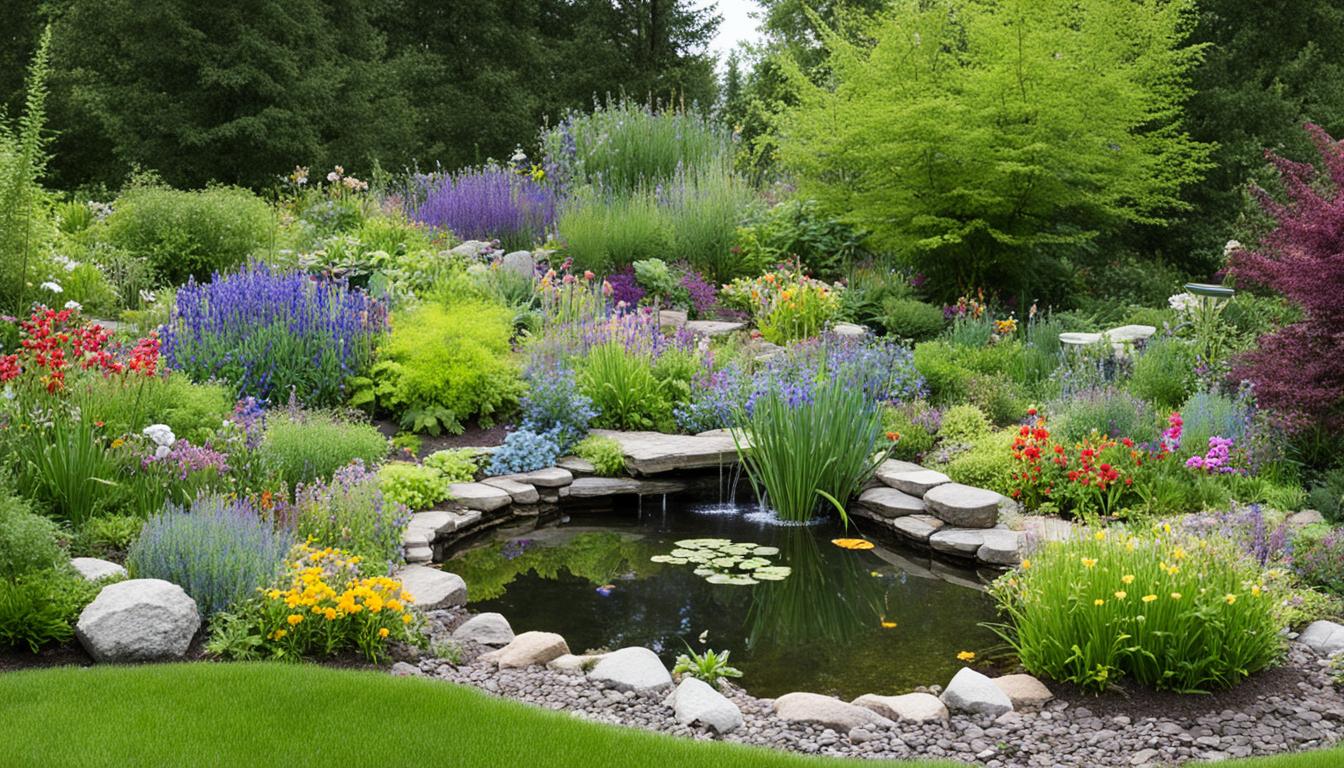
Creating a wildlife-friendly garden is a great way to help local ecosystems and bring in beneficial species. This guide will give you nature tips to make your yard a haven for birds, pollinators, and other wildlife.
Use native plants, add water sources, and cut down on pesticides to make a backyard habitat that supports biodiversity. Your local eco-friendly landscaping will thrive. Whether your yard is big or small, these tips will help you create a bird-friendly space. It will benefit both your local wildlife and your enjoyment of nature.
Attracting Beneficial Insects to Your Garden
Creating a wildlife-friendly garden is not just for birds and butterflies. It’s also about welcoming beneficial insects. These tiny helpers are key to keeping your garden balanced. They help with organic pest control and support pollination.
Planting Nectar-Rich Flowers
Planting a variety of pollinator-friendly plants is a great way to attract beneficial insects. Flowers like zinnias, cosmos, and sunflowers are full of nectar and pollen. They attract bees, butterflies, and ladybugs, which eat pests like aphids and caterpillars.
By planting different flowers that bloom at various times, you make sure there’s always food for them. This creates a garden that supports butterflies all season long.
Providing Water Sources
Beneficial insects also need water. Think about adding a shallow bird bath, a dripping faucet, or a small pond. These water spots draw in insects and help birds and other wildlife.
Keeping water available is key during hot, dry times when natural water is hard to find.
Using organic pest control methods that welcome beneficial insects makes your garden self-sustaining. It means less work for you and more nature to enjoy.
Creating Shelter for Birds and Small Mammals
Creating a safe space for birds, squirrels, and other small wildlife is key in a wildlife-friendly garden. By adding features that offer shelter and nesting spots, you help these creatures flourish.
Installing bird houses is a great way to draw birds to your garden. These wooden homes mimic the natural spots birds look for to nest. Picking the right size and spot for the bird house is crucial. Place it in a quiet spot, away from strong winds, to make it more inviting.
Dense shrubs and fallen branches also offer shelter for small mammals like squirrels and rabbits. These spots protect them from predators and harsh weather, making them safe places to live. Think about adding these features to your garden to help local wildlife.
Having different types of shelters attracts more birds and small mammals to your garden. This boosts your garden’s biodiversity and lets you enjoy watching these creatures in their new home.
Choosing Native Plants for Your Region
Choosing native plants is key for a wildlife-friendly garden. These plants have grown in your area for a long time. They know the local climate, soil, and conditions well. By using native plants, you help local wildlife, from bees to small animals.
Understanding Local Ecosystems
Before picking plants, learn about your local ecosystems. Every area has its own plants and animals, shaped by things like rain, temperature, and soil. Choosing plants that fit these conditions helps create a home for native wildlife.
Supporting Biodiversity
Planting many native species boosts your garden’s biodiversity. These plants feed and house many local animals, like butterflies, birds, and small mammals. This not only makes your garden look great but also helps your local ecosystem stay healthy.

Adding native plants to your garden is an easy way to help local wildlife. By knowing your area’s ecosystem and picking the right plants, you help protect biodiversity. Your garden will become a safe spot for many animals. Enjoy the beauty and benefits of native gardening and see your garden flourish with nature.
Minimizing Pesticide Use
Creating a wildlife-friendly garden means using eco-friendly gardening methods. It’s key to cut down on synthetic pesticides. These can harm the balance in your garden’s ecosystem. By using organic pest control and integrated pest management, you help protect beneficial insects, birds, and small mammals.
Don’t use harsh chemicals. Try natural repellents and add ladybugs and lacewings to fight pests. Healthy soil is important. It has lots of microorganisms and earthworms that break down organic matter and keep pests away.
Plant native, pesticide-free flowers and herbs. They attract pollinators and beneficial insects that eat garden pests.
Choosing organic and pesticide-free gardening helps your garden thrive. It supports many kinds of wildlife. Using a mix of cultural, biological, and mechanical controls is a sustainable way to manage pests. With patience and an eye for natural solutions, you can reduce harmful chemicals. Enjoy a lush, vibrant, and wildlife-friendly garden.
Nature Tips: Embracing Natural Gardening Practices
Creating an eco-friendly yard can turn your outdoor space into a haven for wildlife. With a few simple changes, you can boost biodiversity and help local ecosystems. This is all possible right in your own backyard.
One easy way to make your yard more natural is to leave fallen leaves and branches where they are. These items become shelter and food for many insects, birds, and small mammals. Letting some areas of your yard grow wild helps native plants thrive and supports a diverse habitat.
Another tip is to not prune your plants too much. Let them grow naturally to create a welcoming space for wildlife. Don’t feel the need to tidy up every inch of your yard. Embrace the natural beauty and function of your landscape instead.
By following these simple tips, you can make your yard a thriving ecosystem. The goal is to work with nature, not control it. So, forget about the perfect lawn and aim for a natural, wildlife-friendly garden that shows off the beauty of nature.
Constructing Bird Houses and Feeders
Creating a bird-friendly garden is more than just planting flowers and offering water. Building bird houses and feeders provides essential food and shelter. It’s crucial to pick the right materials and places for these features to attract local birds.
Selecting the Right Materials
For bird houses, use natural, unfinished wood. Stay away from treated lumber because it can harm birds. Cedar and pine are great choices because they last long and resist the weather. Make sure the entrance hole fits the bird species, usually 1 to 1.5 inches wide. Good ventilation and drainage keep the bird house comfy and dry.
For bird feeders, think about using metal, ceramic, or top-quality plastic. Don’t pick feeders with sharp edges or narrow perches, as they’re not safe for birds. Choose feeders with roofs or rain shields to keep the seed dry. Feeders with many feeding ports can welcome different bird species to your garden.

Where you put bird houses and feeders is very important. Place them in safe spots, away from busy areas and predators. Putting them near native plants and water makes your garden even more welcoming for birds.
Establishing a Compost Bin
Creating a vibrant, sustainable garden that draws wildlife is easy with composting. A compost bin in your garden turns organic waste into soil full of nutrients. This supports your plants and boosts your garden’s health.
Recycling Organic Matter
Composting breaks down things like food scraps, yard trimmings, and leaves into a soil amendment full of nutrients. This organic gardening method cuts down on waste. It also makes a healthy soil environment for plants and garden wildlife.
Start by picking a spot for your compost bin that’s easy to reach but not in the sun. Mix green (nitrogen-rich) stuff like food scraps with brown (carbon-rich) stuff like dried leaves and paper. Turn the compost often and keep it moist to speed up the process. Soon, you’ll have nutrient-rich soil for your garden.
Adding a compost bin to your garden does more than cut down on waste. It builds a self-sustaining ecosystem that supports many garden creatures.
Incorporating Water Features
Adding water to your garden can draw in many types of wildlife. A simple birdbath, a peaceful pond, or a welcoming water garden can change your outdoor area into a lively home for wildlife.
A birdbath is easy and popular to add. It gives birds a place to drink and bathe. Putting it near shrubs or trees gives birds extra shelter and safety.
A small pond can be a haven for wildlife if you have enough space. It draws amphibians like frogs and newts, and insects like dragonflies and damselflies. These creatures help keep your garden balanced and natural.
With more space, consider a water garden with plants like water lilies and lotus. These plants make your garden look beautiful and provide water for wildlife. They also support beneficial insects and feed birds and other animals.
Choose any water feature, but keep it clean and clear. Regular maintenance keeps your garden a safe and welcoming place for wildlife.
Certifying Your Garden as Wildlife-Friendly
Do you want to make your garden a haven for local wildlife? Getting a wildlife garden certification shows your dedication and encourages others. Groups like the National Wildlife Federation and Audubon give awards for gardens that help birds, pollinators, and native species.
Getting your garden certified is easy and fulfilling. You just need to have native plants, water, and shelters. This way, you can get the wildlife garden certification or Audubon certification. These certifications prove your hard work and connect you with gardeners who care about nature.
To get certified, you’ll document your garden’s features and apply. You’ll get educational materials, signs for your garden, and the joy of helping wildlife. It’s great for anyone, whether you’re starting or have a long-standing wildlife-friendly garden.
With a wildlife garden certification, you’ll be proud of your role in helping local wildlife. You’ll also motivate others to do the same. Let’s build a network of gardens that support the animals in our neighborhoods.
Maintaining a Year-Round Wildlife Haven
To make your garden a year-round haven for wildlife, adjust your gardening to meet the changing needs of local species. Offer food, shelter, and resources in both winter and growing seasons. This way, you help create a healthy, diverse backyard ecosystem.
In winter, focus on plants that give birds and small mammals food like berries and seeds. Also, keep some leaf litter and fallen branches. They become shelter for insects that stay in your garden during the cold.
When spring comes, switch to plants with lots of nectar for pollinators and other wildlife. Use native plants that fit your local area. They’re key for supporting many different kinds of life.
By following these year-round tips and keeping your garden diverse and healthy, you make a sustainable haven for local wildlife. This ensures your garden meets the needs of your local animals all year.
Sharing Your Wildlife-Friendly Garden with the Community
Creating a wildlife-friendly garden helps the local ecosystem and can inspire others. Share your knowledge with neighbors, schools, or groups to encourage them to support nature. This can lead to more habitats for people and wildlife.
Working with your community can create a network of green spaces. This network can spread as more people learn about nature and local ecosystems. It’s a great way to support environmental education.
Let your community see your wildlife-friendly garden and learn about its plants, insects, and animals. Offer gardening workshops or guided tours to share your Nature Tips. Together, we can make a community that values nature and supports local ecosystems.