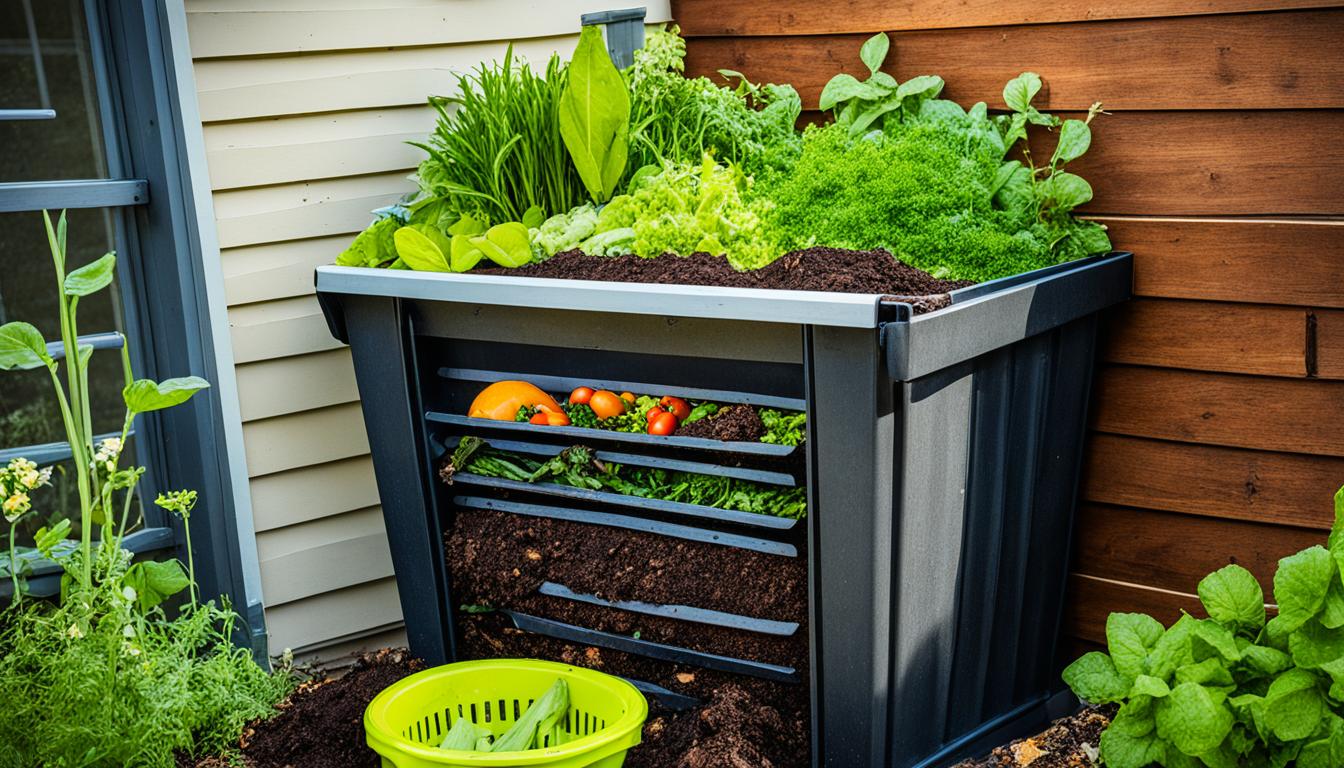
Composting turns your food and yard waste into nutrient-rich soil. This process helps your garden grow and cuts down on waste. By making your own compost bin, you can manage organic waste better and support sustainability. We’ll guide you through building your own compost bin, from picking the right size to making it work well.
Composting keeps waste out of landfills and gives back to your garden. The end product is full of nutrients and helpful microorganisms. These improve soil, keep moisture in, and boost plant health. Whether you’re new to gardening or experienced, making a compost bin is a great way to live more sustainably.
Introduction to Composting and Its Benefits
Composting turns organic waste into a soil amendment full of nutrients. It uses food scraps, yard trimmings, and other materials to help the environment and your garden. This practice is key to sustainable gardening, cutting down on landfill waste, boosting soil health, and supporting growth.
Composting keeps organic waste out of landfills. When waste goes to landfills, it makes methane, a gas that harms the environment. By composting, you help reduce landfill waste. This supports waste management and a greener future.
Compost is great for your garden or landscape. It makes soil better by improving its structure and water retention. It also gives plants the nutrients they need to grow well. This leads to healthier plants and landscapes.
Composting is easy and effective. It turns waste into something valuable for your garden. By composting, you help the planet and get rich soil for your plants.
Choosing the Right Compost Bin Size and Location
Choosing the right compost bin size and location is key to successful composting. The right size and spot can greatly improve how well your organic waste turns into nutrient-rich compost.
Factors to Consider When Selecting a Compost Bin
How much organic waste you have is the main thing to think about when picking a bin size. Think about your household size, yard waste, and other organic materials you’ll compost. A 3-cubic-foot bin works well for small households. But, bigger families or those with lots of waste might need a 5-cubic-foot or bigger bin. The bin should be big enough for your needs but not too big to handle.
Ideal Spots for Placing Your Compost Bin
Where you put your compost bin is as important as its size. Pick a spot that’s easy to get to but not too close to your house to avoid bad smells. It should be in a place with good drainage and some shade to keep moisture right. Don’t put it in direct sunlight as it can make the compost dry out too fast. Also, think about how much space you have in your yard or garden for the bin. Make sure there’s enough room for easy access and turning the materials.
By thinking about the compost bin size and finding the best compost bin location, you’re setting up for a great outdoor composting experience.
Essential Materials for Building a Compost Bin
Building a DIY compost bin is easy and doesn’t have to be expensive. You can often find what you need in your own home or at the local recycling center. Using recycled and sustainable materials lets you make a compost bin that’s good for the planet and meets your gardening needs.
Wooden pallets are a great choice for compost bins. They’re strong, easy to find, and can be repurposed for the frame and sides. You can also use recycled plastic or metal containers like old trash cans or storage bins. Just add airflow holes and a hinged lid to them.
For the base, a wooden platform or a mesh screen works well. They ensure good airflow and drainage. A lid, made from a recycled plastic tarp or wooden boards, keeps moisture and heat in. These are key for composting.
Don’t forget about adding mesh or hardware cloth for better airflow and to create partitions. These small details make your compost bin work better. They help you get a steady supply of nutrient-rich compost for your garden.
Using materials you can easily find and recycle lets you build a strong, eco-friendly compost bin. This way, you reduce waste and help make gardening more sustainable.
Step-by-Step Instructions for Constructing Your Compost Bin
Building your own DIY compost bin is a rewarding project. It helps you reduce waste and create nutrient-rich soil for your garden. We’ll guide you through the step-by-step process of making a customizable compost bin. This includes preparing the base and frame, adding the sides, and putting on the lid.
Preparing the Base and Frame
First, pick a spot for your compost bin that drains well and is easy to get to. Then, lay down a layer of gravel or crushed stones for the base. This helps with airflow and keeps the bin dry.
Next, build a wooden frame. You can use pre-cut panels or cut your own lumber. This frame will be the structure of your compost bin.
Adding the Sides and Lid
With the base and frame ready, add the sides. You can use wooden pallets, wire mesh, or recycled plastic bins. Make sure the sides have good ventilation for air flow, which is key for composting.
Finally, put a lid or cover on your bin. This keeps pests out and helps keep moisture in.
Finishing Touches and Customization Options
To make your compost bin your own, think about adding decorations or useful features. You could paint or stain the wood, add hinges to the lid, or put in a door or panel for easy access. Labels or signs can also help you keep track of what you’re composting.
With these steps, you’re on your way to making your own DIY compost bin. The best part is, you can customize it to fit your needs and preferences. This makes building your compost bin a fun and rewarding task.
What to Compost and What to Avoid
Composting turns your organic waste into nutrient-rich soil. It’s key to know what goes into your compost bin. Knowing the difference between “green” and “brown” materials is crucial for success.
Green and Brown Compostable Materials
Green materials are high in nitrogen and include things like fruit and vegetable scraps, coffee grounds, and fresh grass clippings. These items add moisture and nitrogen to the compost. Brown materials, such as dried leaves, shredded paper, and small twigs, are carbon-rich. They balance the compost’s carbon-to-nitrogen ratio and provide structure.
For a balanced compost, mix green and brown materials equally. Layering them is a good way to ensure a proper mix. This mix helps microorganisms break down waste, making nutrient-rich compost for your soil.
It’s also vital to know what not to add to your compost. Meat, dairy, oils, and pet waste can attract pests and may introduce harmful pathogens. Some plants, like those with diseases or pests, can also spread problems in your compost.
By choosing the right materials and avoiding the wrong ones, you can make a great compost. This turns your organic waste into a valuable soil amendment for your garden or landscape.
Maintaining and Troubleshooting Your Compost Bin
Keeping your compost bin healthy is key to making nutrient-rich compost for your garden. It’s important to focus on aeration and moisture levels. These factors help your compost bin work well and consistently.
Proper Aeration and Moisture Levels
Good airflow is crucial for aerobic bacteria in your compost bin. Without enough air, the compost can turn anaerobic, causing bad smells and slow breakdown. Turn or stir your compost pile often with a pitchfork or aerator tool to add oxygen. Turn it every few weeks or when it seems to be breaking down fast.
Right moisture is also key for compost bin care. The compost should be damp, not dripping wet. If it’s too dry, it breaks down slowly. If it’s too wet, it gets hard and blocks air. Watch the moisture and add water or dry stuff like shredded leaves or straw as needed.

By keeping an eye on aeration and moisture, you can fix and keep your compost bin right. This ensures a steady supply of nutrient-rich compost for your garden or landscape.
Nature Tips: Maximizing Your Compost’s Effectiveness
Composting turns household waste into nutrient-rich soil amendments. But, there are simple tips to make your compost even better. By using a few smart strategies, you can improve your compost’s quality. This ensures it helps your organic gardening the most.
Adding a variety of materials to your compost bin is key. You need both “green” (nitrogen-rich) and “brown” (carbon-rich) stuff. But, you can also add things like crushed eggshells or coffee grounds. These add minerals and trace elements, making your compost better.
Checking the moisture and air in your compost bin is important. The right balance helps with decomposition and makes good compost. Use a compost thermometer and turn the bin to keep things right. This makes sure your compost is healthy and ready for your garden.
The finished compost is a big win for nature. It’s a nutrient-rich soil amendment that boosts plant health. By following these tips, you’ll make your compost work better. And you’ll enjoy the benefits of sustainable gardening.
Using Finished Compost in Your Garden or Landscape
When your using compost is ready, it’s time to use it in your garden or landscape. This nutrient-rich material can be a great garden soil amendment. It helps make the soil richer and supports healthy plant growth.
Adding compost application to your gardening can bring many benefits. It improves soil structure, holds water better, and gives plants the nutrients they need. By using compost, you can turn poor, hard soil into a rich, fertile area. This will feed your flowers, vegetables, and other plants well.
Enriching Your Soil with Nutrient-Rich Compost
To make the most of your compost application, spread 2-4 inches of it over your garden beds or around trees and shrubs. Mix it into the top few inches of soil gently, avoiding plant roots. For potted plants, add a handful of compost to the soil before planting, or put a thin layer on top.
The nutrients and good bacteria in using compost will slowly add to the soil. This gives your plants a steady supply of food. Soon, you’ll see healthier plants, more flowers and fruits, and better landscape improvement.
Feel free to get creative with your compost application. Use it to improve lawns, potting mixes, or make special soil blends for plants. By using your homemade compost well, you’ll help your garden grow strong and healthy.
Advanced Composting Techniques and Variations
For those passionate about composting, there are many advanced techniques and variations to explore. These methods can make your composting more efficient and beneficial. From vermicomposting to Bokashi composting and hot composting, each method has its own benefits.
Vermicomposting: This method uses worms to break down organic matter. You keep red wiggler worms in a bin or container. This creates a nutrient-rich compost that enriches your soil. It’s perfect for those with little outdoor space, as it can be done indoors.
Bokashi Composting: Bokashi is an anaerobic method that uses beneficial microorganisms to quickly break down food waste. It’s great for tough materials like meat, dairy, and cooked foods. The Bokashi compost can be added to your regular pile or directly into the soil.
Hot Composting: For quick decomposition, hot composting is a top choice. It keeps the pile moist and well-aired, reaching temperatures up to 160°F (71°C). This heat speeds up the breakdown, making compost in weeks or months instead of years.
Trying these advanced methods can deepen your understanding of composting. They help you get the most out of your compost for your garden or landscape. Whether you’re into vermicomposting, Bokashi composting, or hot composting, each has its own benefits. They can elevate your composting game.

Composting: A Sustainable Solution for Waste Reduction
Composting is a key solution to the growing waste problem. It turns organic waste into nutrient-rich soil. This helps reduce landfill waste and supports a sustainable economy.
More people and communities are now using composting. This shift helps us see waste as a valuable resource, not just trash.
Composting has big environmental benefits. It keeps organic waste out of landfills, cutting down methane production. Methane is a strong greenhouse gas that harms the climate.
Compost also makes soil better. It adds nutrients and helps soil hold water, making gardens and landscapes healthier. This leads to a stronger food system.
In the circular economy, waste is seen as a resource. Composting turns food scraps and yard waste into compost. This closes the loop, reducing waste and conserving resources.
This approach supports sustainable living. It cuts down on our use of limited natural resources. This leads to a greener future.