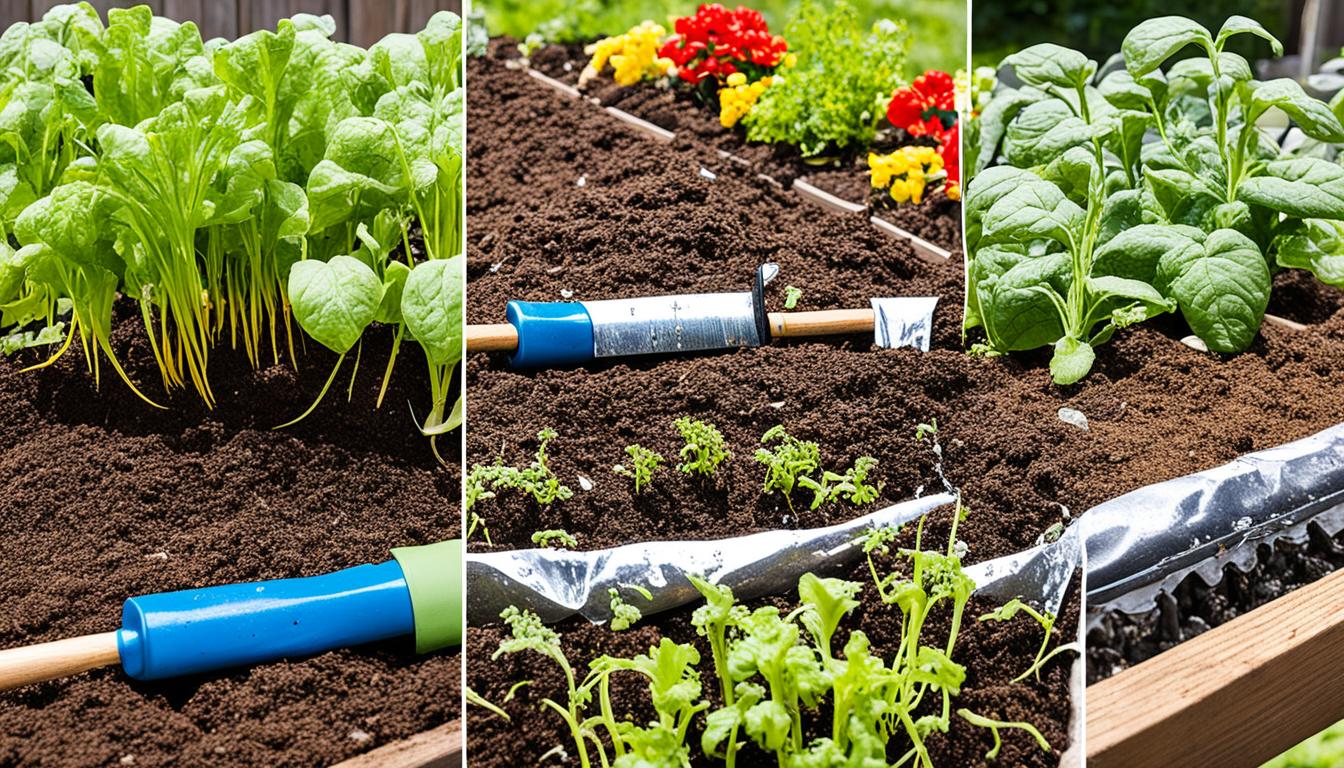
Starting a garden is a rewarding journey that connects you with nature. It lets you grow your own food and create a beautiful outdoor space. These 10 essential tips will help you begin a thriving garden. They cover everything from picking the right spot to keeping your garden healthy and pest-free.
Gardening has many benefits, like the joy of caring for plants and the pride of eating your own food. With these simple tips, you’ll be on your way to a vibrant, productive garden. This garden will bring you joy for many years.
Choosing the Perfect Garden Location
Choosing the right spot for your garden is key to its success. We’ll look at important factors like sunlight and soil quality. These help make sure your plants grow well.
Sunlight Exposure
It’s important to check how much sunlight your garden gets. Most plants need at least 6 hours of direct sunlight daily. Watch how the sun moves and note any shady spots. This helps you pick the right plants for your garden.
Soil Quality
Soil quality is crucial for plant health and growth. Check your soil’s texture, nutrient levels, and drainage. You want soil that drains well and is rich in organic matter. If your soil is poor, add compost or other organic stuff to improve it.
Think about the garden location, sunlight exposure, and soil quality carefully. Doing so will help you create the best conditions for your garden.
Planning Your Garden Layout
Designing your garden’s layout is key to a beautiful and functional garden. It helps you use space well, create a nice flow, and make sure plants grow well. Here are some tips for planning your garden layout.
Start by measuring your garden’s size and shape. Look at any trees, structures, or slopes you might have. This helps you plan where to put your garden beds, paths, and other features. Make sure to leave enough space for plants to grow and breathe.
Think about the different areas you want in your garden. You might have a spot for veggies, flowers, herbs, and a place to relax. Put these areas together in a way that works for you and the garden’s flow.
Pathways are also important in your garden layout. They help you move around easily and add beauty. Use different materials like pavers, gravel, or stepping stones for a nice look and feel.
Lastly, think about how your garden looks. Arrange plants and features in a way that’s pretty and balanced. Try different shapes, textures, and heights to make your garden beautiful and interesting.
Selecting Seeds and Plants
Choosing the right seeds and plants is key for a successful garden. Gardeners can pick between heirloom and hybrid plants. Knowing the differences helps you decide based on your gardening goals and likes.
Heirloom vs. Hybrid Varieties
Heirloom plants have been around for generations, often for decades or even centuries. They are loved for their unique tastes, bright colors, and genetic variety. Heirloom seeds are cheaper and can be saved from year to year, letting you grow your favorite plants again and again.
Hybrid plants come from crossing two different plants. They are made for things like more produce, fighting diseases, and lasting longer. But, you can’t save hybrid seeds because their kids might not be the same.
Companion Planting
Companion planting means growing different plants together to help each other grow better, keep pests away, or help in other ways. By picking plants that work well together, you make your garden stronger and more diverse. For instance, marigolds with tomatoes can keep away bad nematodes, and lettuce and radishes together use space well.
Choosing heirloom or hybrid plants and using companion planting are great ways to make your garden better. Pick a mix of seeds and plants that fit your local weather and soil. This way, you’ll have a garden that’s full of life and doesn’t need lots of chemicals.
Preparing the Soil
Healthy soil is key for a great garden. Before planting, make sure to prepare your soil well. This means testing the soil and fixing it if needed for your plants.
Soil Testing
Start by testing your soil. This tells you about the pH level, nutrients, and soil type. Knowing this helps you choose the right amendments. Many places offer cheap soil tests to help you.
Amending the Soil
After testing, you can fix the soil. You might add compost or manure to improve it. Or, you could use lime or sulfur to change the pH. Adding these things before planting makes your garden perfect for your plants.

Preparing your soil well sets your garden up for success. Good soil gives your plants what they need to grow well. This leads to a lot of food and a beautiful garden.
Planting and Spacing Guidelines
Proper planting and spacing are key for a healthy and productive garden. Whether you’re experienced or new to gardening, knowing how to plant seeds and seedlings correctly is crucial. It also helps to follow the right plant spacing guidelines.
Start by reading the instructions on your seed packets or plant labels. This ensures you plant seeds or seedlings at the right depth and distance. Typically, seeds should be planted twice as deep as their size. Also, follow the recommended spacing for each plant.
Plant spacing is vital for garden health and layout. Too many plants together can lead to poor growth and health issues. They may not get enough sunlight, water, or nutrients. On the other hand, plants spaced too far apart might not produce as much.
The best spacing depends on the plants you’re growing, their size, and your garden’s conditions. Leafy greens and small plants usually need 6-12 inches apart. Larger plants like tomatoes and squash should have 18-24 inches between them. Always check the seed packet or plant label for specific advice.
Watering Techniques for Optimal Growth
Watering your garden right is key to its success. Using a drip irrigation system is a top choice. It sends water straight to the roots, cutting down on waste and boosting growth.
Drip Irrigation Systems
Drip irrigation slowly feeds water into the soil. This method uses less water than sprinklers or hand-watering. It targets the roots, keeping the leaves dry and preventing diseases.
Getting a drip irrigation system is a smart move for gardeners. It helps save water and makes watering your garden easier. You can adjust it to fit your plants’ needs perfectly.
Other great ways to water your garden include deep watering, mulching, and picking water-saving plants. Mixing these methods ensures your plants get the right amount of moisture for growth.
Nature Tips for a Thriving Garden
Creating a lush garden is more than just knowing how to garden. To make a garden that’s good for the planet, use nature’s ways. Here are some tips to make your garden grow and protect the environment.
Attracting helpful insects and wildlife to your garden is key. Use native plants to draw in bees, butterflies, and hummingbirds. These creatures are important for pollination, which helps your garden grow well.
Try eco-friendly gardening methods that copy nature. Use companion planting to keep pests away and help plants grow better together. This cuts down on chemical use and makes your garden stronger.

Using mulch is another great idea. Mulch keeps soil moist, stops weeds, and adds nutrients as it breaks down. It’s like what happens naturally in forests.
Follow these gardening tips and use nature-based gardening ideas. You’ll get a garden that’s beautiful, supports nature, and is good for the planet. Let nature help you enjoy a successful eco-friendly gardening project.
Pest Control and Disease Management
Keeping a garden healthy means dealing with pests and diseases. Luckily, you can use organic and natural ways to keep your plants safe. These methods help your plants grow well without using harsh chemicals.
Organic Methods
Using organic pest control is a great way to protect your garden. These methods are good for the planet and keep your plants safe. Start by adding beneficial insects like ladybugs and lacewings to your garden. They eat pests like aphids and mites.
You can also use natural repellents to keep pests away. Garlic, onions, or essential oils can help. These keep pests from coming near your plants.
To prevent diseases, take steps before they start. Make sure your plants get enough air, have healthy soil, and pick plants that resist disease. If a disease does show up, use organic fungicides or baking soda to fix it. This way, you won’t harm the environment.
By using these organic ways to control pests and diseases, your garden will thrive. You’ll use fewer harmful chemicals. This is good for your plants, your family, and the planet.
Harvesting and Preserving Your Bounty
When your garden starts giving you lots of food, it’s important to know how to harvest and preserve it. This guide will show you how to harvest, can, freeze, and store your garden’s tasty produce. This way, you can enjoy your garden’s food even after the growing season ends.
Harvesting your crops at the right time is crucial for their taste and nutrition. Look for signs like size, color, and texture to know when they’re ready. When picking, be gentle to avoid hurting the other plants.
After picking your produce, think about how to keep it fresh. Canning is great for keeping fruits and vegetables fresh for a long time. Freezing is also good for things like berries and leafy greens. Using airtight containers or vacuum sealing is a smart way to keep your preserved produce fresh.
Learning how to harvest and preserve your garden’s food lets you enjoy it all year. With some planning and effort, you can taste the fresh flavors of your garden even when it’s not growing season.
Creating a Compost Bin
Composting is key for gardeners. It turns waste into soil that makes your garden healthier. A compost bin is easy to set up and helps your garden stay fertile over time.
For good composting, mix “green” and “brown” materials. Green stuff includes food scraps, grass clippings, and coffee grounds. Brown stuff is dry leaves, shredded paper, and sawdust. Layering these in your compost bin helps microorganisms break down waste into a great soil amendment.
Start by picking a spot for your compost bin that’s airy and shady. Layer green and brown materials, keeping it moist but not soggy. Use a pitchfork or aerator to turn the compost often. This speeds up the process.
In a few months, you’ll have compost that smells earthy and is full of nutrients. It’s perfect for feeding your garden and plants, helping them grow strong and healthy.